How to Outsource Digital Marketing: What to Delegate, How to Choose a Partner, and What to Expect
Ready to outsource digital marketing? Learn which services to delegate first, how to evaluate agencies, and what results to expect in the first 90 days.
Atastic Team
Digital Marketing Agency

Outsourcing digital marketing is one of the highest-leverage decisions a growing business can make. Instead of spending months hiring specialists and building processes from scratch, you gain access to an experienced team that can start delivering results within weeks.
But outsourcing is not as simple as handing off your marketing and hoping for the best. Success depends on knowing what to delegate, choosing the right partner, setting clear expectations, and managing the relationship effectively. This guide walks through the entire process, from the decision to outsource through your first 90 days and beyond.
Why Businesses Outsource Digital Marketing
The reasons companies choose to outsource their marketing have evolved. It is no longer just about cost savings. Here are the most common motivations we see:
Access to Specialized Expertise
Digital marketing now spans SEO, paid media, content strategy, email marketing, social media, analytics, conversion optimization, and more. Hiring experts in each discipline is prohibitively expensive for most businesses. Outsourcing gives you access to a full team of specialists for a fraction of the cost of building one internally.
Speed to Market
Hiring a marketing team takes 3 to 6 months when you account for job postings, interviews, offers, notice periods, and onboarding. An agency can be up and running in 2 to 4 weeks. When you are launching a new product, entering a new market, or responding to competitive pressure, speed matters.
Scalability
Marketing demands are rarely constant. You might need heavy campaign support during a product launch and lighter maintenance in between. Outsourcing lets you scale up or down without the overhead and HR implications of adjusting headcount.
Focus on Core Business
Marketing is essential, but it may not be your core competency. Outsourcing frees your leadership team to focus on product development, customer success, and operations while experts handle your growth engine.
Better Tools and Technology
Agencies invest in enterprise-grade marketing tools because they amortize the cost across multiple clients. SEO platforms, analytics suites, ad management tools, and design software that would cost your business EUR 2,000 to EUR 5,000 per month are typically included in agency retainers.
What Digital Marketing Services to Outsource
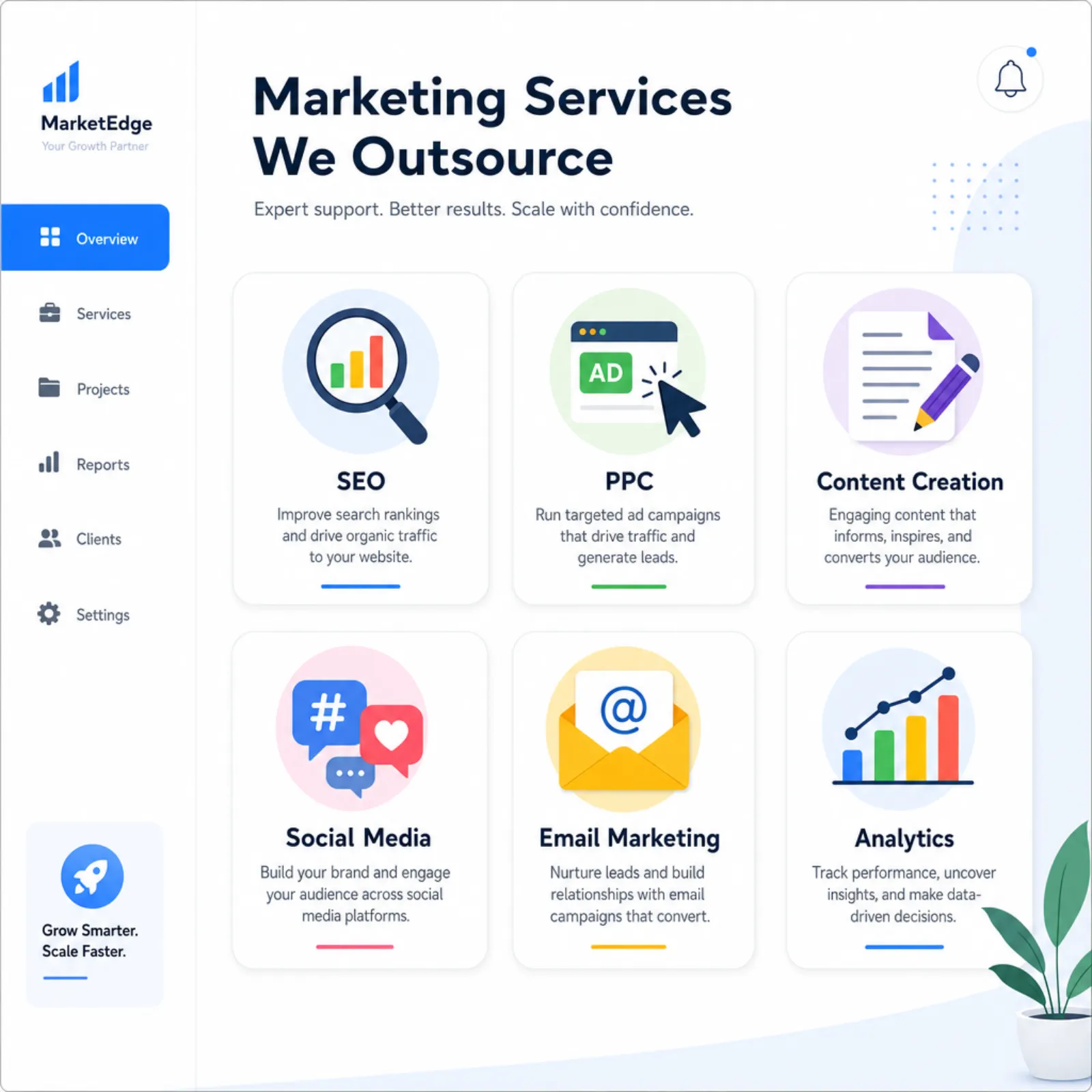
Not every marketing function is equally suited for outsourcing. Here is a breakdown of the most commonly outsourced services and why they work well with an external partner.
Search Engine Optimization (SEO)
SEO is one of the most commonly outsourced marketing services, and for good reason. It requires deep technical knowledge, constant adaptation to algorithm changes, and access to expensive tools. An experienced SEO team brings strategic depth that is difficult to replicate with a single in-house hire. The work spans technical audits, keyword strategy, content optimization, link building, and ongoing performance tracking.
Paid Media (PPC)
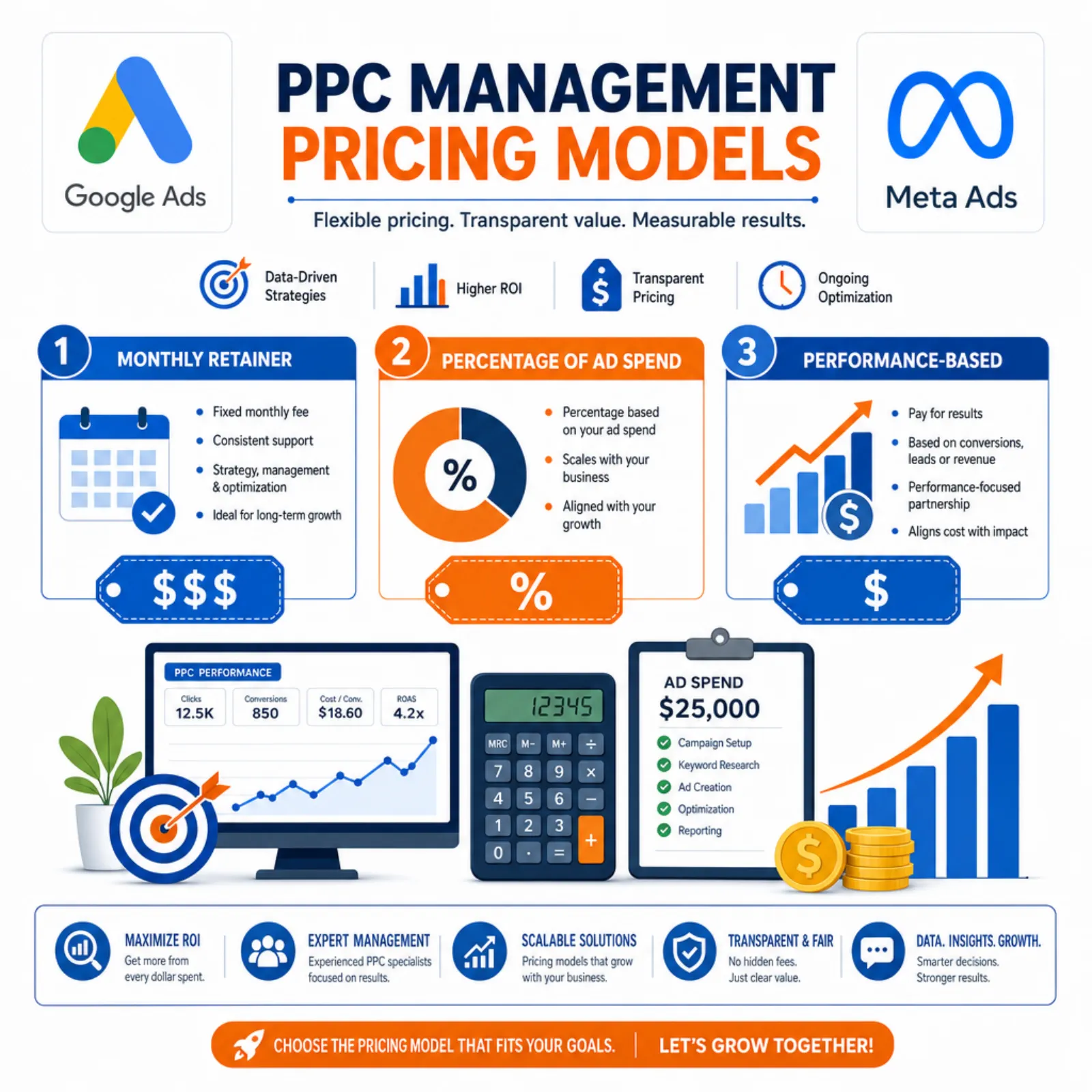
Google Ads, Meta Ads, LinkedIn Ads, and other paid channels require specialized expertise to manage profitably. Campaign structure, bidding strategy, audience targeting, creative testing, and attribution modeling are all specialized skills. Poor management wastes budget quickly. A paid media agency brings experience across industries and platforms, along with tested frameworks for campaign optimization.
Analytics and Reporting
Proper analytics setup is the foundation of every marketing decision. This includes Google Analytics 4 configuration, conversion tracking, attribution modeling, dashboard creation, and data analysis. Most businesses dramatically underinvest in analytics, which means they make decisions without reliable data. Outsourcing analytics ensures your measurement infrastructure is solid from the start.
Content Strategy and Production
Creating a steady stream of high-quality, strategically aligned content is resource-intensive. Content strategy services include editorial planning, keyword-driven topic selection, writing, editing, and performance optimization. Outsourcing content production works especially well when combined with outsourced SEO, as the strategy and execution stay tightly integrated.
Email Marketing
Effective email marketing goes beyond sending newsletters. It includes automation workflows, segmentation strategy, A/B testing, deliverability management, and lifecycle campaigns. Outsourcing email marketing ensures you benefit from best practices and proven frameworks rather than learning through trial and error.
Social Media Marketing
Social media management requires daily attention, creative content production, community engagement, and platform-specific expertise. Outsourcing makes sense for businesses that need a consistent social presence but cannot justify a full-time social media manager. An agency brings content calendars, creative production, and cross-platform strategy.
What to Keep In-House
While outsourcing execution works well, some functions should remain internal:
- Brand strategy and positioning: Your brand identity, values, and positioning should be defined internally. No one understands your company's DNA better than you do.
- Customer knowledge: Direct relationships with customers, product feedback, and market intelligence should flow from your team to your agency, not the other way around.
- Strategic direction: The overall marketing strategy and priorities should be set by your leadership. The agency executes against that direction.
- Sales alignment: The handoff between marketing leads and sales follow-up needs internal ownership and coordination.
- Content approval: While agencies can produce content, someone internal should review it for accuracy, brand voice, and alignment with company messaging.
The most effective outsourcing relationships have a clear internal owner, typically a marketing leader or business owner, who provides direction, feedback, and strategic context to the agency.
How to Choose a Digital Marketing Agency
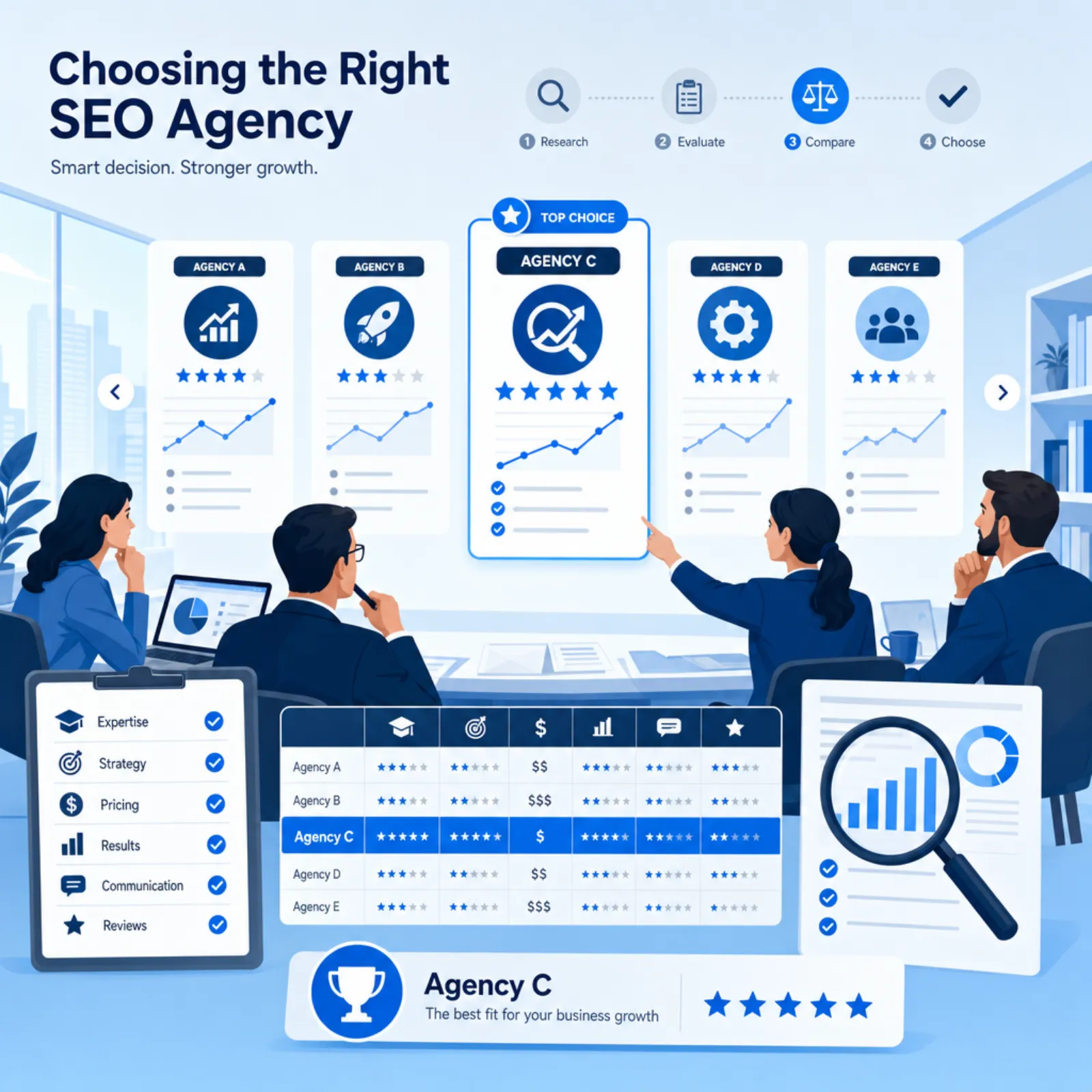
Choosing the wrong agency is expensive in both money and time. Here is a structured approach to finding the right partner.
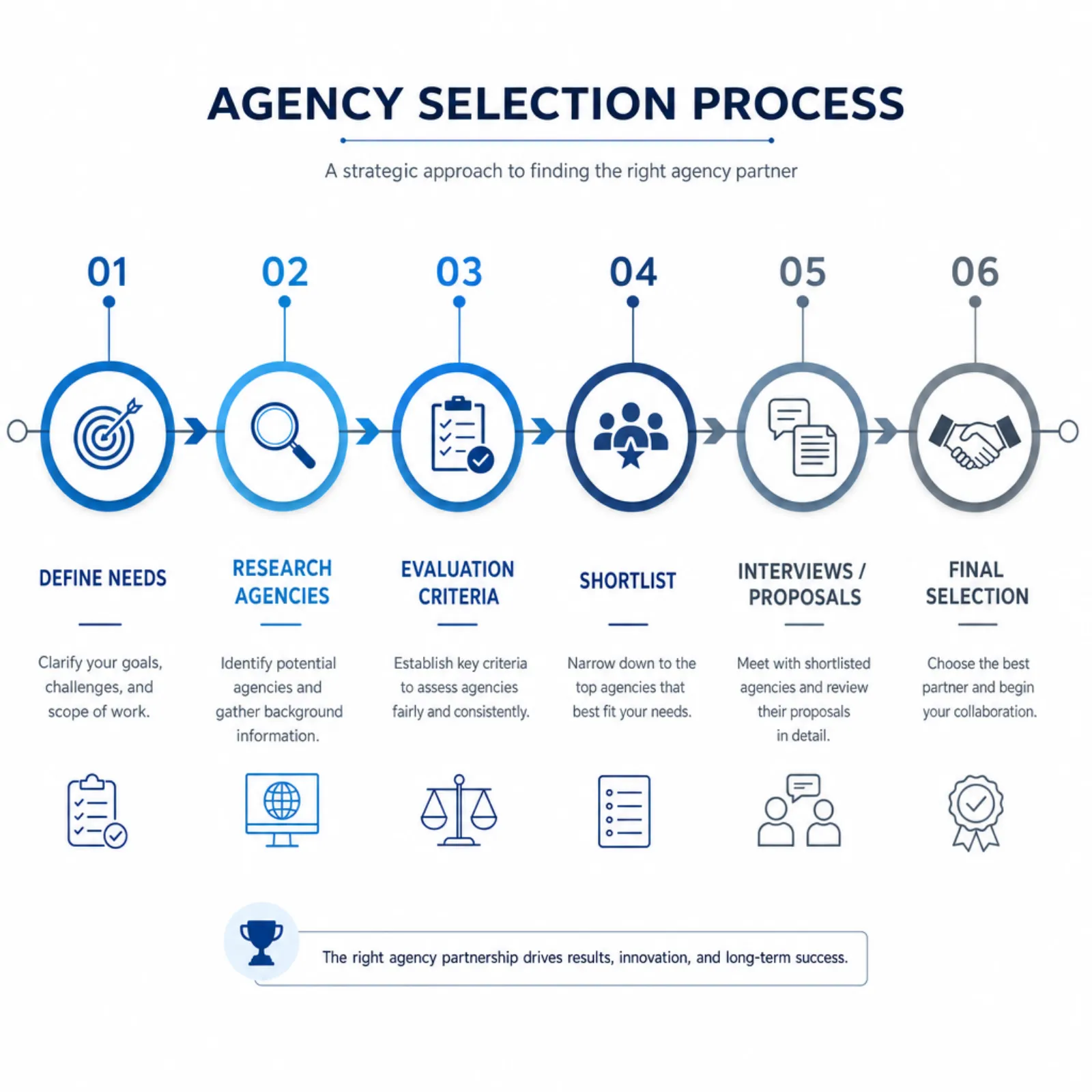
Define Your Goals First
Before talking to any agency, be clear about what you want to achieve. Vague goals like "do better marketing" lead to vague proposals. Specific goals lead to specific strategies you can evaluate.
Good goals look like:
- Increase organic traffic by 50% in 12 months
- Generate 30 qualified leads per month from paid search
- Reduce cost per acquisition by 25%
- Launch and scale content marketing from zero to 10,000 monthly organic visitors
Evaluate Expertise and Track Record
Look for evidence of results, not just impressive presentations:
- Case studies: Do they have documented results for businesses similar to yours?
- Industry experience: Have they worked in your industry or a closely related one?
- References: Can they connect you with current or recent clients who will speak honestly?
- Team credentials: Who will actually work on your account? What is their experience level?
Understand Their Process
A credible agency has a defined process for onboarding, strategy development, execution, and reporting. Ask them to walk you through:
- How the first 30, 60, and 90 days will look
- How they develop strategy and get your approval
- How they communicate progress and handle feedback
- How they measure and report on results
- What they need from you to be successful
Evaluate Pricing Transparently
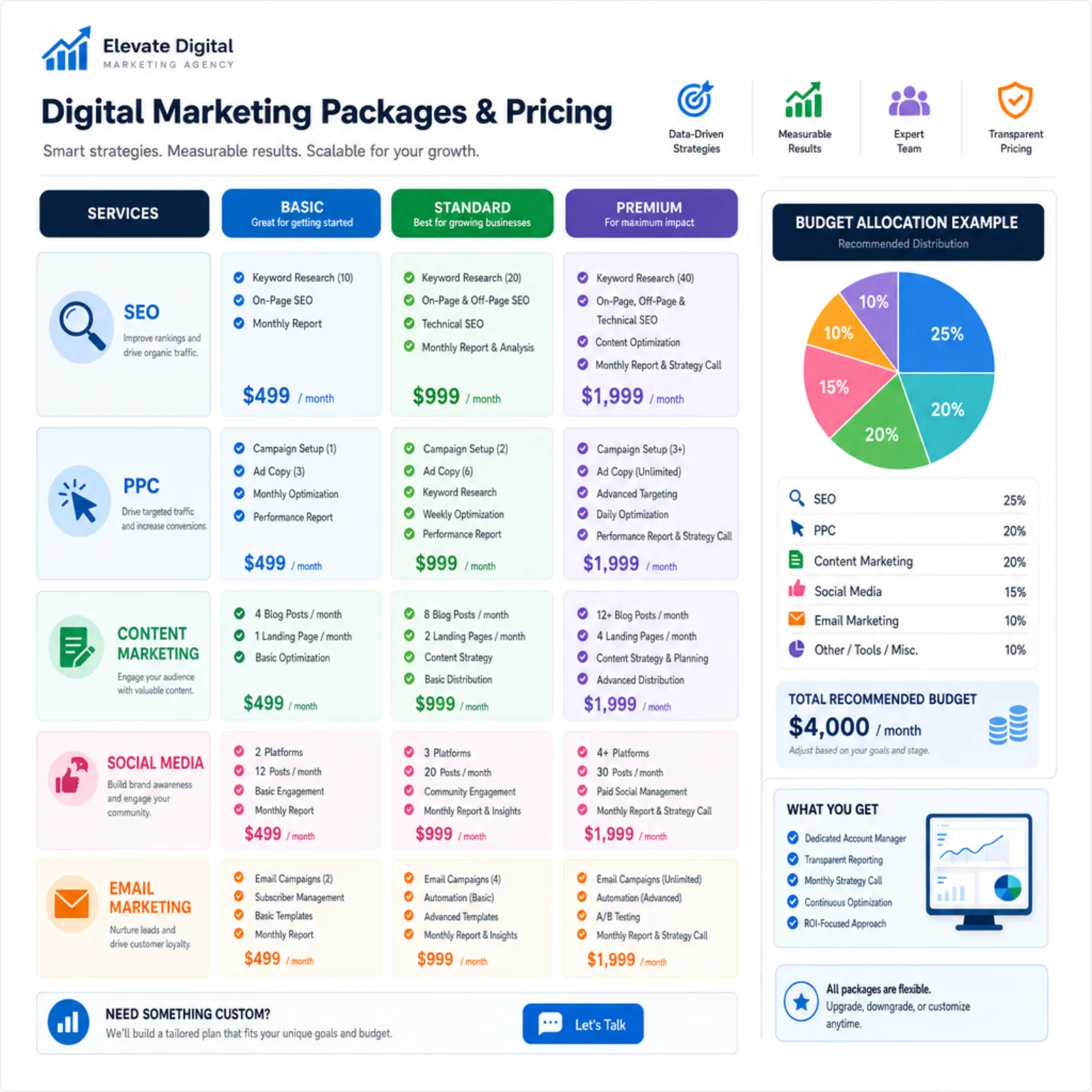
Understand exactly what is included in the retainer. Compare proposals on scope, not just price. A EUR 3,000/month retainer with unclear deliverables is not comparable to a EUR 5,000/month retainer that specifies every component. Use our pricing calculator to get a sense of what different service combinations cost, or review our pricing page for transparent package details.
Watch for Red Flags
Avoid agencies that exhibit these warning signs:
- Guaranteed rankings: No one can guarantee specific positions in Google search results
- No discovery phase: If they propose a strategy before understanding your business, they are selling a template, not a solution
- Black-box reporting: You should own your data, have access to all platforms, and understand exactly what they are doing
- Long lock-in contracts: Reasonable commitment periods (3 to 6 months) are normal, but 12-month lock-ins with no performance clauses should raise concerns
- Vague about who does the work: Some agencies sell the engagement with senior people and hand execution to juniors or offshore teams without telling you
- No strategic thinking: If the proposal is just a list of activities without a strategy connecting them to your goals, the work will lack direction
What to Expect in the First 90 Days
Setting realistic expectations about timelines and outcomes prevents frustration and builds a foundation for a productive long-term partnership.
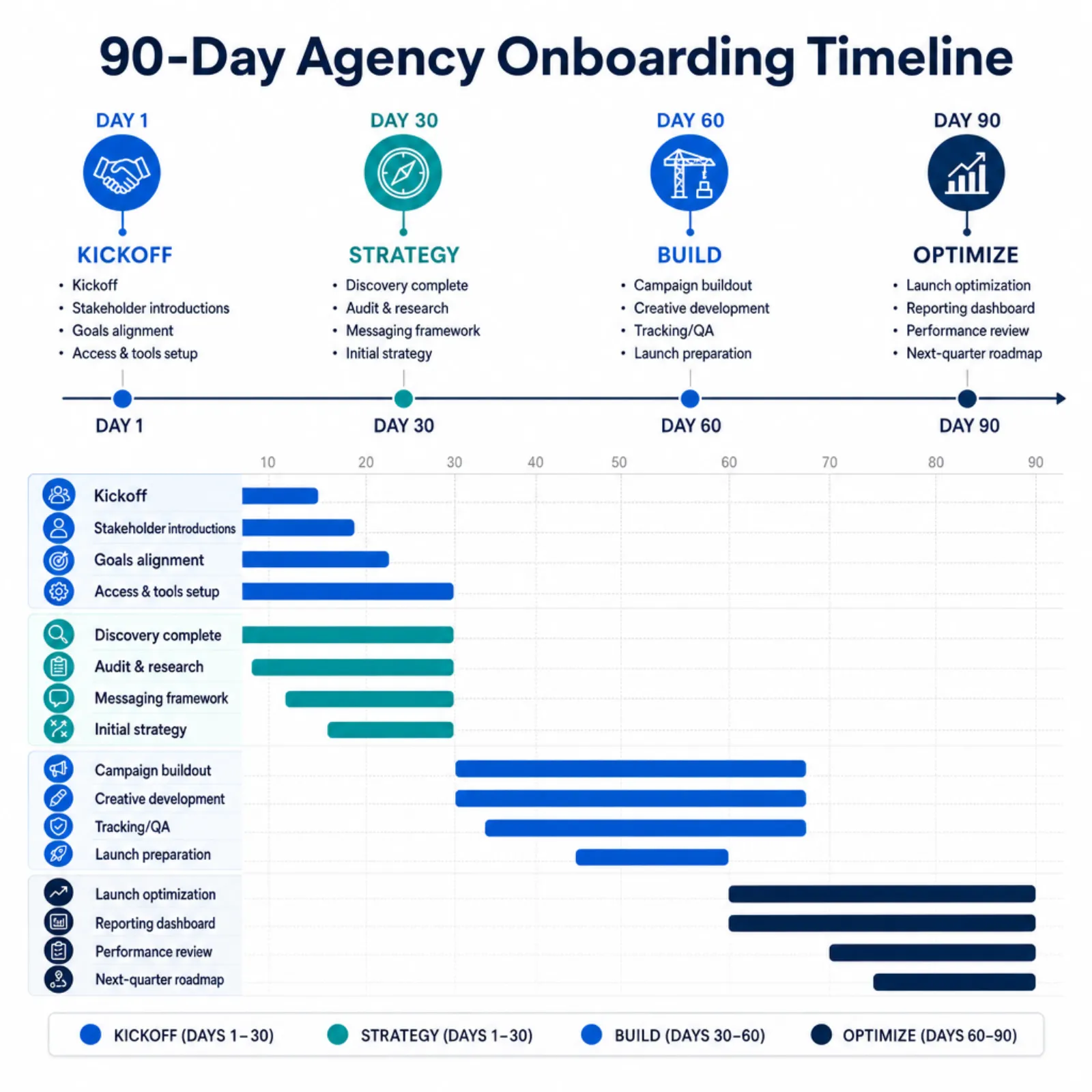
Days 1 to 30: Discovery and Setup
The first month is about foundation work:
- Onboarding meetings to understand your business, products, customers, and competitive landscape
- Technical audits of your website, analytics, and existing marketing assets
- Access setup for all platforms (Google Analytics, Search Console, ad accounts, CMS, social accounts)
- Baseline measurement of current performance metrics
- Strategy development and presentation for your review and approval
Do not expect significant performance improvements in month one. This is the research and planning phase, and it is critical. Agencies that skip this step and jump straight into execution usually produce mediocre results.
Days 31 to 60: Initial Execution
In month two, execution begins:
- Technical SEO fixes and quick wins get implemented
- Content production starts based on the approved strategy
- Paid campaigns launch with initial budgets and targeting
- Analytics tracking is refined and validated
- First performance data starts coming in
You may see early wins, especially from paid media and technical fixes. SEO and content results are still building at this point.
Days 61 to 90: Optimization and First Results
By month three, you should see:
- Initial data showing the impact of technical SEO improvements
- Paid media campaigns optimized based on first performance data
- Published content beginning to get indexed and attract some organic traffic
- A clear reporting framework that connects activity to business outcomes
- Confidence (or concerns) about the trajectory
The 90-day mark is a good checkpoint for evaluating the partnership. You should have clarity on the agency's capabilities, communication quality, and whether the strategy is sound. Significant traffic or revenue results from SEO typically take 4 to 6 months.
How to Manage an Outsourced Marketing Relationship
The agency's expertise only delivers results if the relationship is managed well. Here are the practices that separate successful outsourcing from disappointing ones.
Assign a Single Point of Contact
Designate one person internally as the agency's primary contact. This person manages the relationship, provides feedback, approves deliverables, and ensures the agency has what they need. Splitting this across multiple people creates confusion and slows down execution.
Establish a Communication Rhythm
Define a regular cadence:
- Weekly: Short status call or async update on tasks in progress
- Monthly: Performance review meeting with data, insights, and next-month priorities
- Quarterly: Strategic review to assess whether the overall approach is working and adjust course
Share Context Generously
The more your agency understands about your business, the better their work will be. Share information about upcoming product launches, competitive moves, seasonal patterns, and internal priorities. Treat them like an extension of your team, not a vendor you keep at a distance.
Provide Timely Feedback
Delayed feedback slows down the entire operation. If content needs approval, approve it within 48 hours. If a campaign concept needs input, respond promptly. Agencies cannot maintain momentum when client bottlenecks introduce weeks of delay.
Focus on Outcomes, Not Hours
Resist the urge to track every hour the agency spends. What matters is whether they are delivering the agreed results, not whether they spent exactly 40 hours this month. Trust the process and evaluate based on outcomes.
Review and Adjust
No strategy survives contact with reality unchanged. Be open to adjusting the approach based on what the data shows. Good agencies will proactively recommend changes when something is not working. Support that adaptability rather than insisting on sticking to the original plan.
Ready to Outsource Your Digital Marketing?
Outsourcing digital marketing can accelerate your growth, give you access to expertise you could not hire individually, and free your team to focus on what they do best. The key is choosing the right partner and investing in a productive working relationship.
If you are considering outsourcing, start a conversation with the Atastic team. We will help you determine which services to outsource first, build a tailored scope of work, and set clear expectations for what you will achieve.