PPC Management Pricing: How Much Does It Cost to Have an Agency Manage Your Ads?
PPC management typically costs EUR 500 to EUR 5,000 per month plus ad spend. Learn the pricing models agencies use, what services are included, and how to evaluate whether professional management is worth the investment.
Atastic Team
Digital Marketing Agency
Pay-per-click advertising can be one of the most effective ways to generate leads and sales. But managing PPC campaigns well requires specialized knowledge, daily attention, and constant optimization. That's why many businesses hire agencies to manage their ad accounts.
The question most businesses ask first: how much does PPC management cost? The answer depends on your ad spend, the pricing model, and what's included. This guide breaks down PPC management pricing so you can budget accurately and choose the right partner.
PPC Management Pricing at a Glance
PPC management costs vary widely depending on business size, industry, and the complexity of campaigns. Here's a general overview of what businesses typically pay for professional PPC management:
- Small businesses (EUR 1,000-5,000/month ad spend): Management fees of EUR 500-1,500/month
- Mid-market businesses (EUR 5,000-25,000/month ad spend): Management fees of EUR 1,500-3,500/month
- Enterprise (EUR 25,000+/month ad spend): Management fees of EUR 3,500-10,000+/month
These are management fees only. Ad spend is separate and paid directly to the advertising platforms (Google, Meta, LinkedIn, etc.). So your total PPC investment equals management fee plus ad spend.
For a quick estimate tailored to your situation, try our pricing calculator.
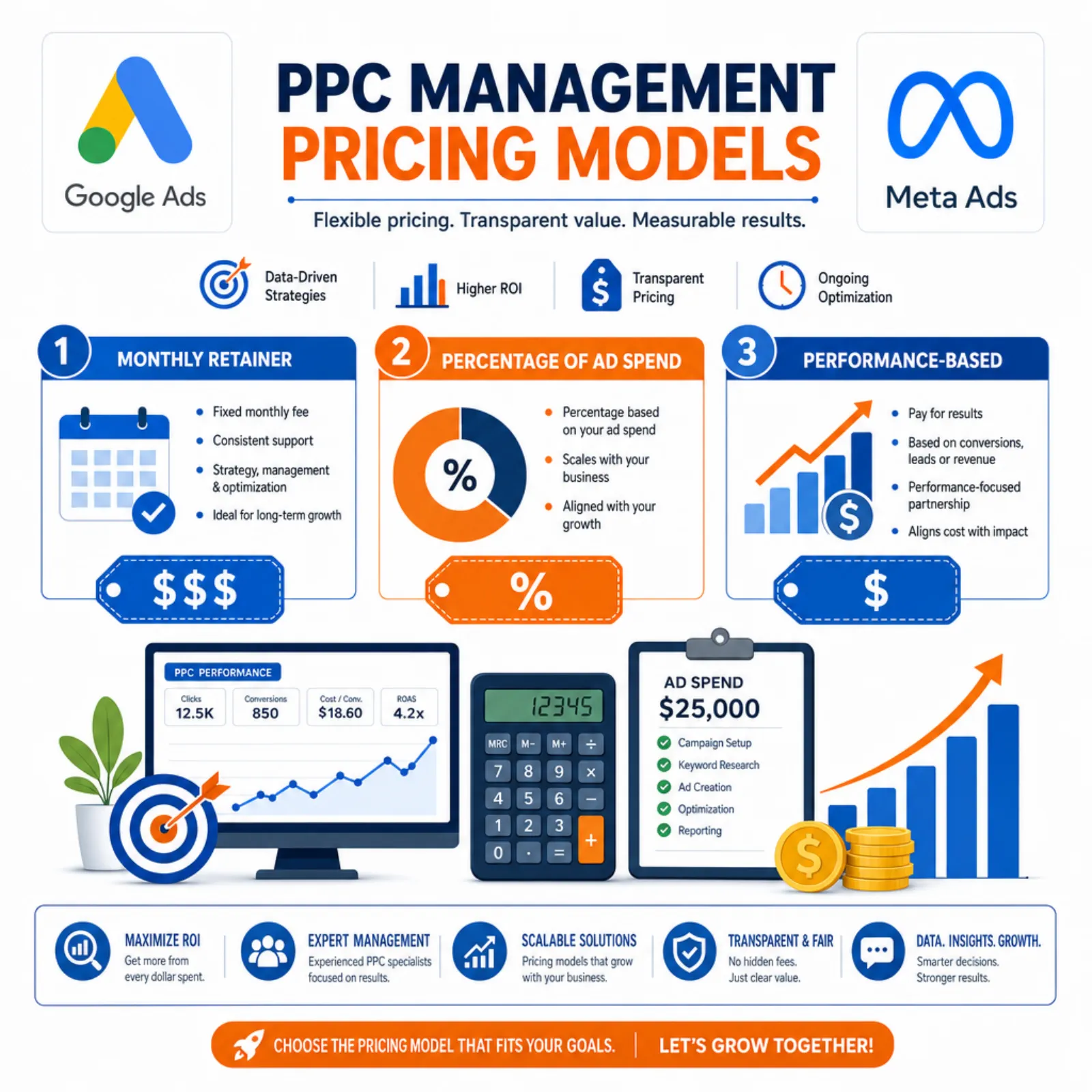
PPC Management Pricing Models
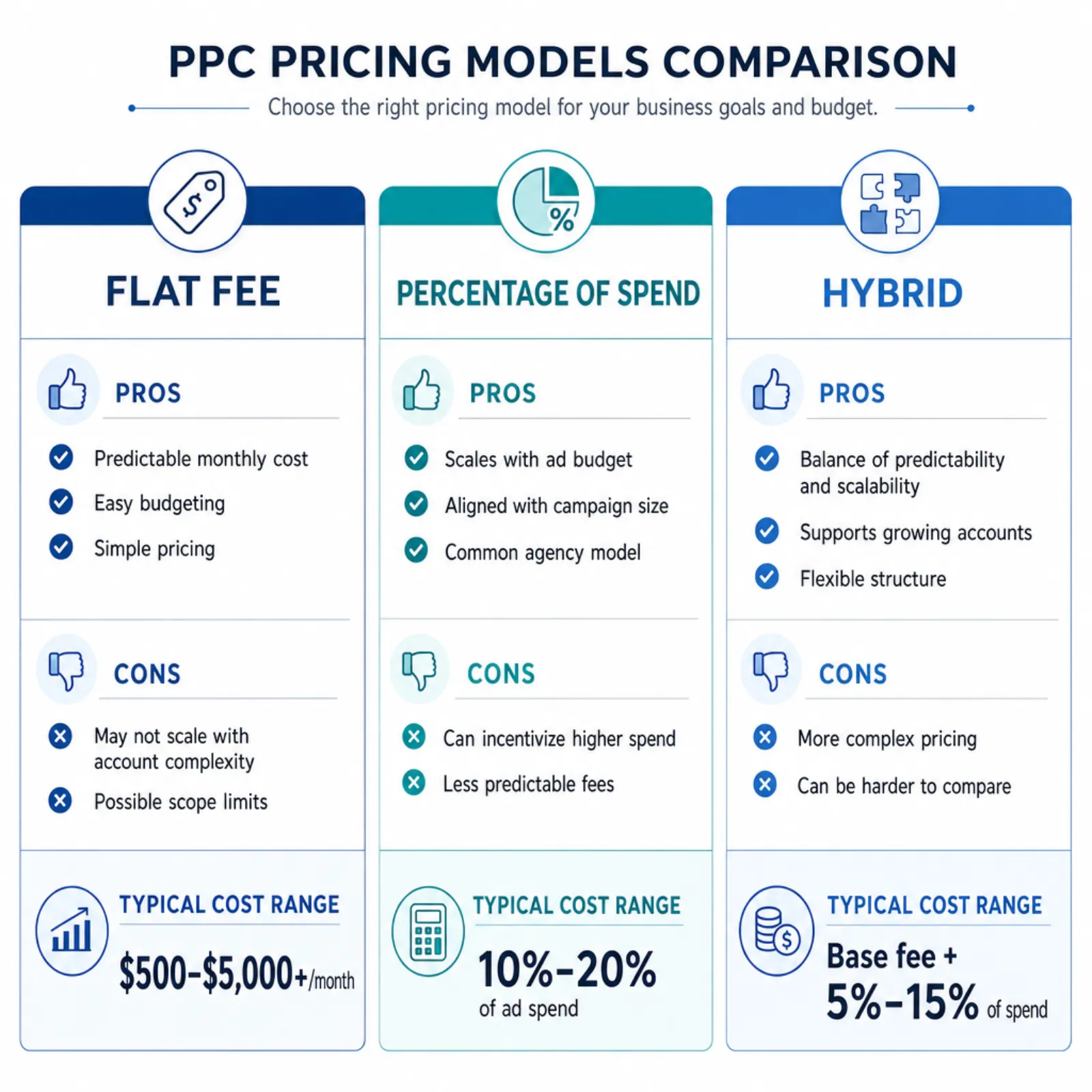
Agencies use several pricing structures for PPC management. Each has trade-offs in terms of cost predictability, alignment of incentives, and scalability.
Flat Monthly Fee
The agency charges a fixed amount each month regardless of your ad spend. This is the most straightforward model and the easiest to budget for.
Typical range: EUR 500-5,000/month depending on scope and agency tier.
Pros:
- Predictable monthly cost
- No incentive for the agency to inflate your ad spend
- Simple to understand and compare across agencies
Cons:
- May not scale well if your ad spend grows significantly
- Agency effort might not increase even if your campaigns become more complex
Best for: Small to mid-sized businesses with stable ad budgets.
Percentage of Ad Spend
The agency charges a percentage of your monthly advertising spend, typically between 10% and 25%.
Typical range: 10-20% for larger budgets, 15-25% for smaller budgets (with minimum monthly fees often applied).
Pros:
- Scales naturally with your investment
- Agency revenue grows when your campaigns grow
Cons:
- Creates an incentive for the agency to recommend higher ad spend (whether justified or not)
- Your management cost increases even if the agency's workload doesn't
- Less predictable monthly costs
Best for: Businesses with growing ad budgets who want agency effort to scale with investment.
Hybrid Model
Combines a lower flat fee with a smaller percentage of ad spend. For example, EUR 1,000/month base fee plus 10% of ad spend.
Pros:
- Provides a baseline income for the agency (so they can staff appropriately)
- Scales with ad spend but less aggressively than a pure percentage model
- Balances predictability with growth alignment
Cons:
- More complex to understand and compare
- Still has some incentive misalignment around ad spend growth
Best for: Mid-market businesses that want cost stability with room for growth.
Performance-Based Pricing
The agency is paid based on the results they generate, such as a cost per lead or a percentage of revenue generated from ads.
Pros:
- Strong alignment between agency incentive and your business goals
- You only pay for results
Cons:
- Requires robust conversion tracking and attribution (which many businesses lack)
- Agencies may focus on easy wins rather than long-term strategy
- Disputes over attribution are common
- Few reputable agencies offer pure performance pricing because results depend partly on factors outside their control (your product, your sales team, your website)
Best for: Businesses with mature tracking and clear, measurable conversion events. Often used in combination with a base fee.
What Should PPC Management Include
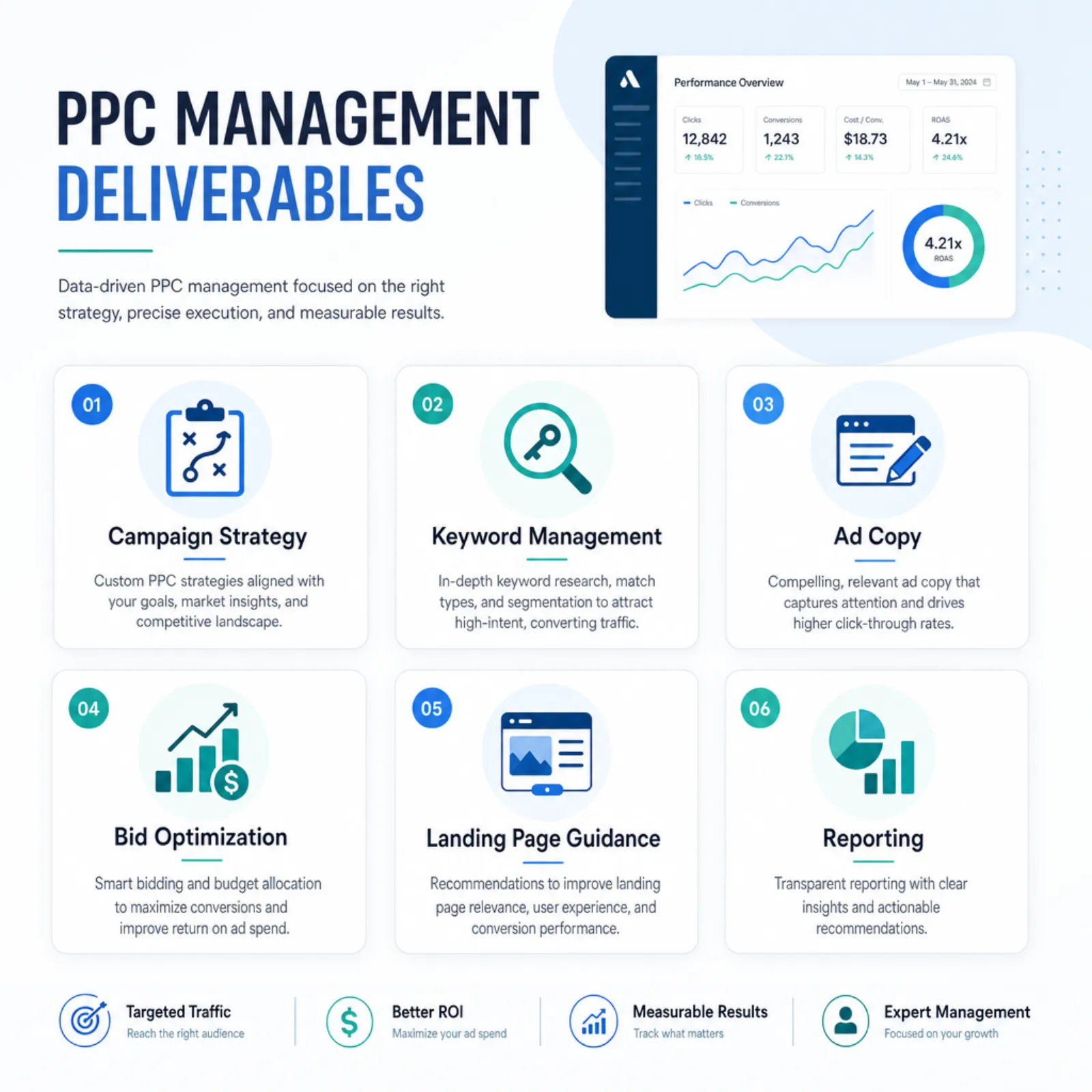
Understanding what you're paying for is just as important as understanding how much you're paying. A comprehensive PPC management service should include these core components.
Strategy and Setup
- Account audit: Review of existing campaigns (if applicable) to identify waste and opportunity
- Keyword research: Identifying the search terms that drive qualified traffic in your market
- Campaign structure: Organizing campaigns, ad groups, and keywords for maximum relevance and quality score
- Ad copywriting: Writing compelling ad copy and testing multiple variations
- Landing page recommendations: Advising on page design and messaging that converts clicks into leads or sales
- Conversion tracking setup: Implementing proper tracking for leads, sales, and other key actions
Ongoing Campaign Management
- Bid management: Adjusting bids based on performance data, competition, and budget targets
- Negative keyword management: Blocking irrelevant search terms that waste budget
- Ad testing: Running A/B tests on ad copy, extensions, and creative
- Audience refinement: Adjusting targeting based on demographic, geographic, and behavioral data
- Budget optimization: Reallocating budget toward campaigns and keywords that deliver the best ROI
- Quality score improvement: Ongoing work to improve ad relevance, landing page experience, and expected click-through rate
Reporting and Analysis
- Monthly performance reports: Clear reporting on spend, clicks, conversions, cost per acquisition, and return on ad spend
- Strategy recommendations: Data-driven suggestions for scaling what works and cutting what doesn't
- Competitive analysis: Monitoring competitor ad activity and adjusting strategy accordingly
- Regular strategy calls: Monthly or bi-weekly calls to review performance and discuss next steps
A strong agency also ties PPC performance to broader marketing goals, connecting paid media data with your analytics and tracking to measure true business impact.
Platform Coverage
Most PPC management focuses on Google Ads, but many agencies also manage:
- Microsoft Ads (Bing): Often lower CPCs with a different audience demographic
- Meta Ads (Facebook/Instagram): Strong for B2C, retargeting, and brand awareness
- LinkedIn Ads: Best for B2B lead generation and account-based marketing
- YouTube Ads: Video advertising with Google's targeting capabilities
Multi-platform management typically costs more than single-platform management due to the additional complexity.
What Affects PPC Management Pricing
Several factors influence how much an agency charges for PPC management.
Number of Platforms
Managing Google Ads alone is simpler than managing Google, Meta, LinkedIn, and Microsoft Ads simultaneously. Each platform has its own interface, best practices, and optimization requirements. Expect to pay more for multi-platform management.
Campaign Complexity
An e-commerce account with 10,000 products requires fundamentally different management than a local service business running 5 keyword campaigns. Product feed management, dynamic remarketing, shopping campaigns, and multi-language campaigns all add complexity and cost.
Ad Spend Level
Higher ad spend typically means more to manage: more keywords, more ad groups, more data to analyze, and higher stakes when optimization decisions are wrong. Agencies that use percentage pricing naturally charge more as spend increases, but even flat-fee agencies often tier their pricing based on ad spend ranges.
Reporting Depth
Basic reporting (monthly PDF with key metrics) is standard. Custom dashboards, real-time reporting portals, attribution modeling, and executive-level reporting add cost. Consider whether the extra reporting is genuinely useful or just feels impressive. What matters is actionable insight, not more charts.
How to Calculate PPC ROI
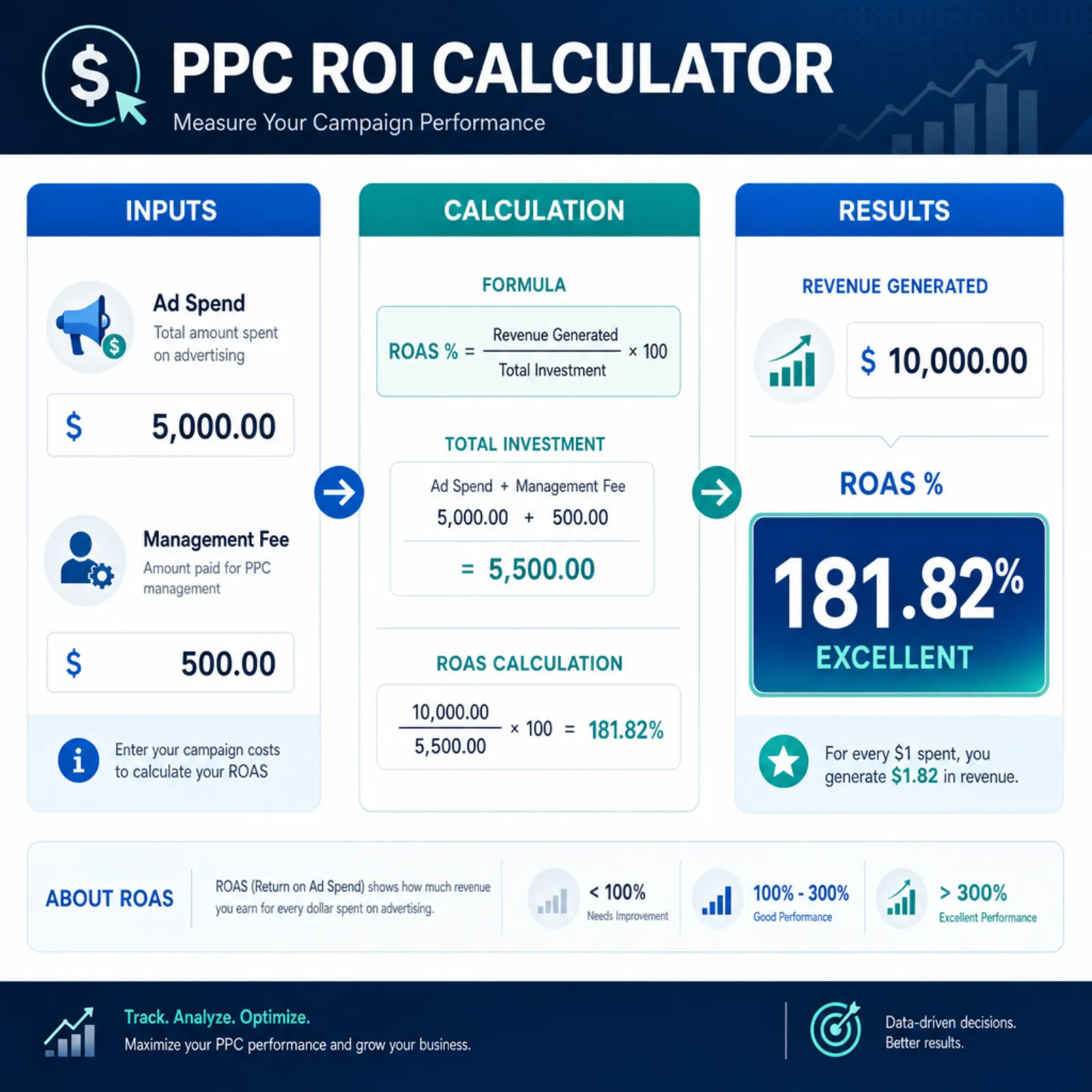
Before evaluating whether PPC management is worth the cost, you need to understand your return on investment. Here's a straightforward framework:
- Track your total PPC cost: Management fee + ad spend = total monthly PPC investment
- Measure conversions: How many leads or sales did PPC generate this month?
- Calculate cost per acquisition: Total PPC cost / number of conversions = CPA
- Determine customer value: What's the average revenue per customer or lifetime value?
- Calculate ROI: (Revenue from PPC customers - total PPC cost) / total PPC cost x 100
For example: If you spend EUR 3,000 on ads plus EUR 1,500 on management (EUR 4,500 total) and generate 30 leads that convert to 6 customers worth EUR 2,000 each (EUR 12,000 revenue), your ROI is 167%.
This calculation requires proper conversion tracking and optimization. Without it, you're flying blind. A good PPC agency will help set this up as part of onboarding.
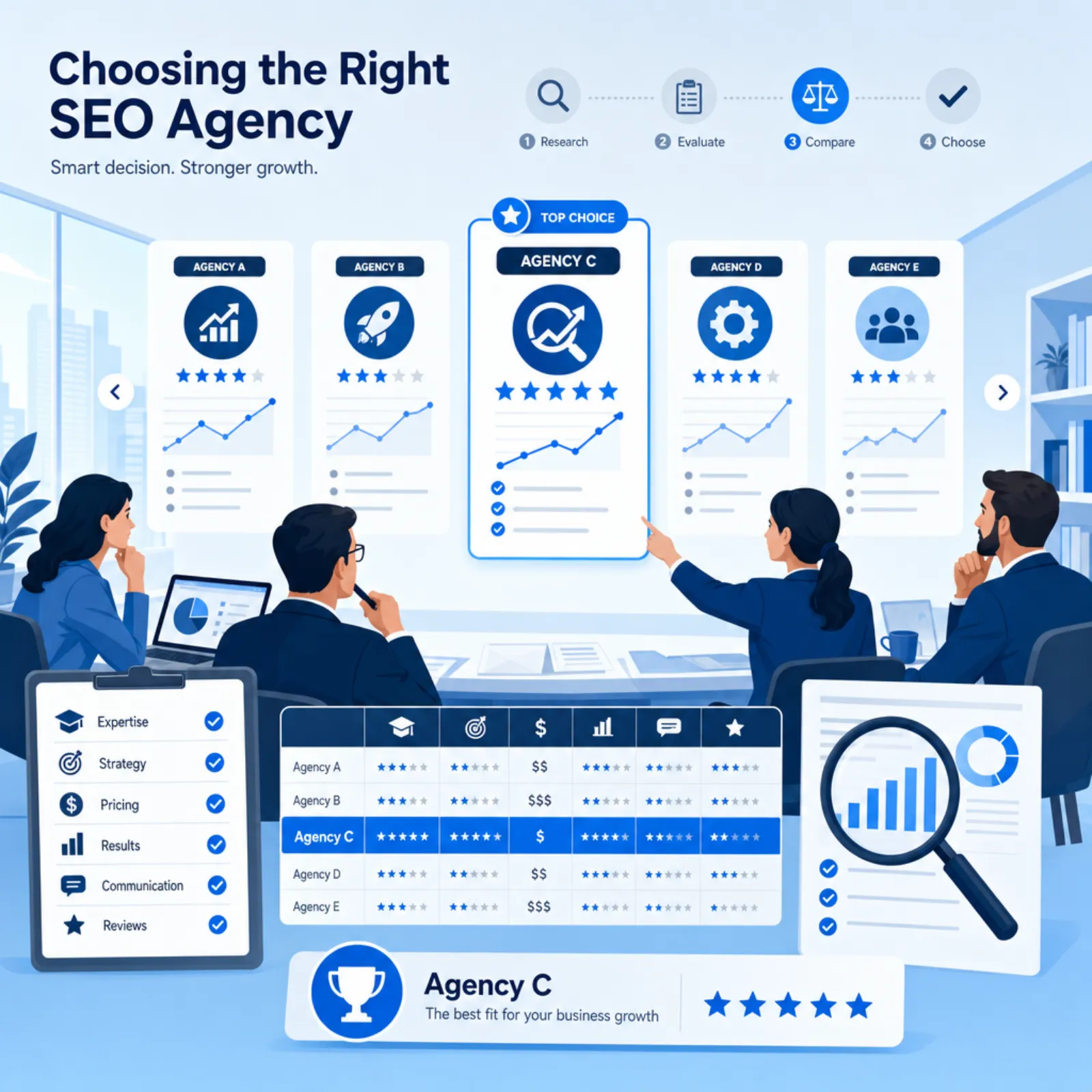
How to Choose a PPC Management Agency
Price should not be the only factor. Here's what else to evaluate:
- Platform certifications: Google Partner status, Meta Business Partner, or Microsoft Advertising Partner. These indicate the agency meets platform-specific competency requirements.
- Industry experience: An agency that has managed campaigns in your industry will ramp up faster and avoid common pitfalls.
- Account ownership: You should always own your ad accounts. Never let an agency create accounts under their umbrella.
- Contract terms: Avoid long lock-in contracts without performance guarantees. Month-to-month or 3-month initial terms are reasonable.
- Communication quality: How responsive are they during the sales process? That's your preview of the client experience.
- Transparency: Can they explain their strategy clearly? Do they share full access to your ad accounts and data?
- References: Talk to current clients. Ask about results, communication, and responsiveness.
View our pricing page to understand what Atastic charges and what's included at each tier.
Atastic's PPC Management Approach
At Atastic, we take a data-driven, transparent approach to PPC management. Here's what makes our service different:
- Full transparency: You own your accounts, see every change we make, and understand exactly where your budget goes.
- Business-focused optimization: We optimize for revenue and profit, not just clicks or impressions. Every decision is tied to your business goals.
- Cross-channel integration: We connect PPC data with SEO, analytics, and conversion optimization to maximize total marketing ROI.
- Regular communication: Monthly strategy calls with clear reporting. No jargon, no vanity metrics. Just honest performance data and actionable next steps.
- No long-term lock-ins: We earn your business every month. Our contracts are flexible because we believe performance, not paperwork, should keep clients.
Ready to get a clear picture of what PPC management would cost for your business? Reach out for a free consultation or use our pricing calculator for an instant estimate.