SEO Retainer vs. Project-Based SEO: Which Model Is Right for Your Business?
Comparing SEO retainers with project-based engagements. Learn the differences in scope, pricing, deliverables, and results to decide which model fits your business.
Atastic Team
Digital Marketing Agency
When you decide to invest in SEO, one of the first questions you face is how to structure the engagement. Do you hire an agency on a monthly SEO retainer, or do you scope a one-time project with a defined start and end date? The answer depends on your goals, your budget, and how much of your growth strategy relies on organic search.
Both models have legitimate uses. But choosing the wrong one can mean overpaying for services you don't need or, worse, underinvesting in an area that requires sustained effort. This guide breaks down the differences so you can make an informed choice.
What Is an SEO Retainer?
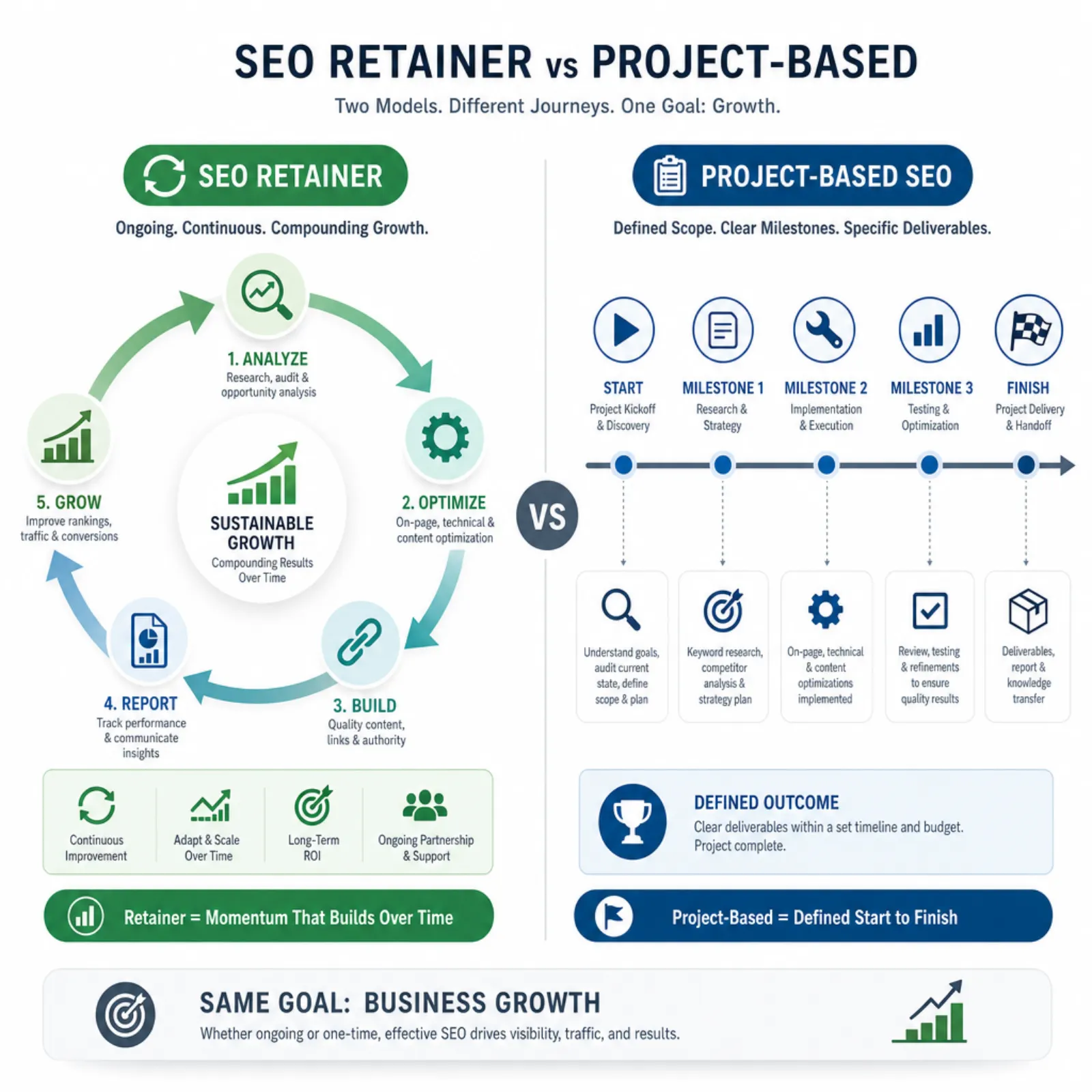
An SEO retainer is an ongoing monthly engagement where a business pays a fixed fee to an agency or consultant for continuous SEO work. Rather than scoping individual deliverables, a retainer establishes an ongoing relationship where the SEO team becomes an extension of your marketing function.
Retainers typically run month to month or on 6-to-12-month contracts. The agency allocates a set number of hours or a defined scope of work each month, and the strategy evolves based on performance data, algorithm changes, and shifting business priorities.
Think of an SEO retainer the way you'd think about a gym membership rather than a personal training session. The membership gives you ongoing access and consistent support. A single session solves an immediate problem but doesn't create lasting change on its own.
Why Retainers Are the Industry Standard
SEO is inherently a long-term discipline. Rankings take time to build. Content needs to be published consistently. Technical health requires ongoing monitoring. Backlink profiles grow over months, not days. A retainer model aligns the engagement structure with the way SEO actually works.
What Is Project-Based SEO?
Project-based SEO is a fixed-scope engagement with a defined deliverable, timeline, and budget. You hire an agency to complete a specific piece of work, and the engagement ends when that work is delivered.
Common project-based SEO engagements include:
- Technical SEO audits: A comprehensive review of site health, crawlability, indexation, and performance issues
- Site migrations: SEO planning and execution for domain changes, CMS migrations, or major redesigns
- Keyword research: A one-time deep dive into keyword opportunities and content mapping
- Content strategy development: Building a content plan with topic clusters, briefs, and prioritization
- Competitor analysis: A detailed audit of competitor SEO strategies, backlink profiles, and content gaps
- Local SEO setup: Google Business Profile optimization, citation building, and local landing pages
Project-based SEO works well when you have internal resources to execute recommendations but need outside expertise for a specific challenge.
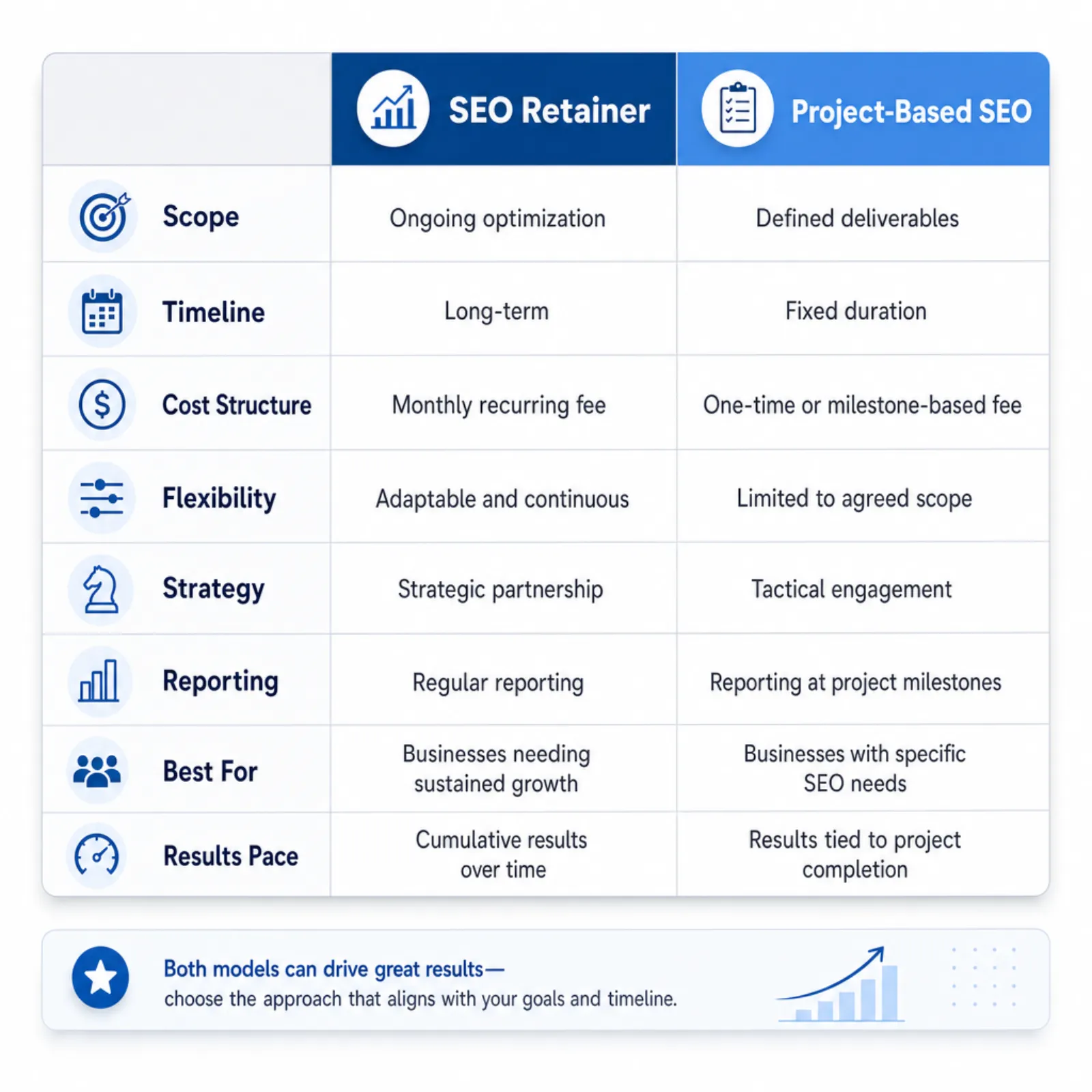
SEO Retainer vs. Project-Based: Full Comparison
Both models serve different needs. Here's how they compare across the dimensions that matter most.
Scope of Work
A retainer covers an evolving scope. Each month, the agency prioritizes tasks based on current performance data, new opportunities, and your business goals. This might mean focusing on technical fixes one month, content production the next, and link building the month after.
A project has a fixed scope. You agree on deliverables upfront, the agency executes, and the work is complete. There's clarity in what you're getting, but no flexibility to adapt as you learn.
Cost Structure
Retainers typically cost between EUR 1,000 and EUR 10,000 per month depending on the agency, your market, and the scope of services. You're paying for sustained effort and ongoing expertise. Over a year, this represents a significant investment, but it also compounds in value.
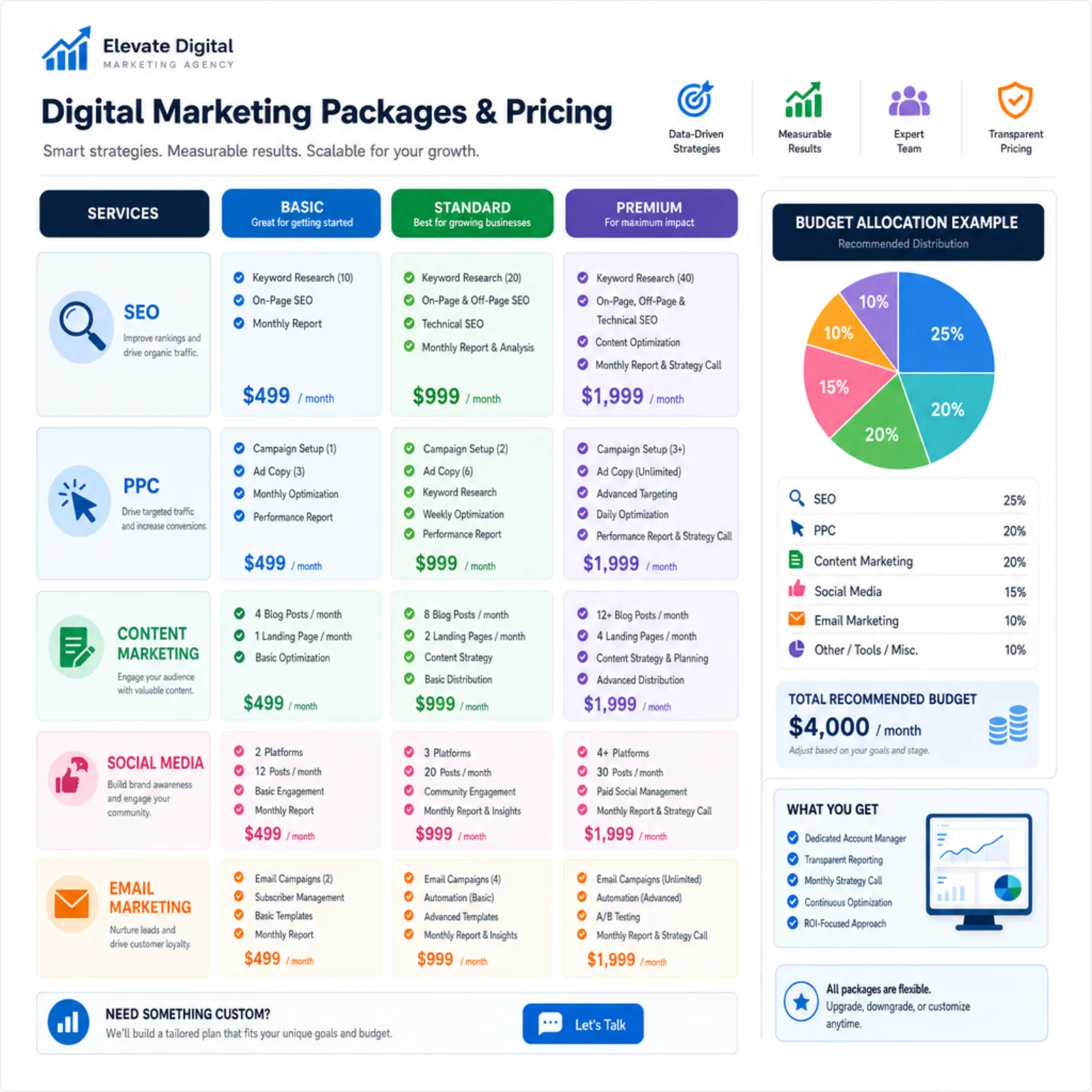
Projects usually range from EUR 2,000 to EUR 20,000 depending on complexity. You pay once (or in milestones), get the deliverable, and that's it. The upfront cost may feel lower, but without implementation and ongoing optimization, the value can decay over time. You can see our pricing for a breakdown of what different engagement levels include.
Results and ROI
Retainers generally produce stronger ROI over time because SEO compounds. Content published in month one still drives traffic in month twelve. Technical improvements build on each other. A retainer agency continuously optimizes based on what the data shows, which means performance improves month over month.
Projects deliver immediate value (a completed audit, a migration plan, a keyword map), but results depend entirely on whether someone implements and maintains the recommendations. An audit that sits in a Google Drive folder generates zero ROI.
Relationship Depth
On a retainer, your SEO team learns your business deeply. They understand your customers, your competitive landscape, your internal constraints, and your growth trajectory. This context makes their recommendations more relevant and effective over time.
Projects are transactional by nature. The agency delivers what was scoped and moves on. There's less opportunity to build the deep understanding that produces the best SEO results.
Accountability
Retainers create stronger accountability because both parties are invested in long-term performance. The agency knows their renewal depends on demonstrating results. You get regular reporting, strategy calls, and clear KPIs to track progress.
Project accountability is simpler: did the agency deliver what was promised? Quality matters, but there's less incentive for the agency to care about what happens after the project ends.
What's Typically Included in an SEO Retainer
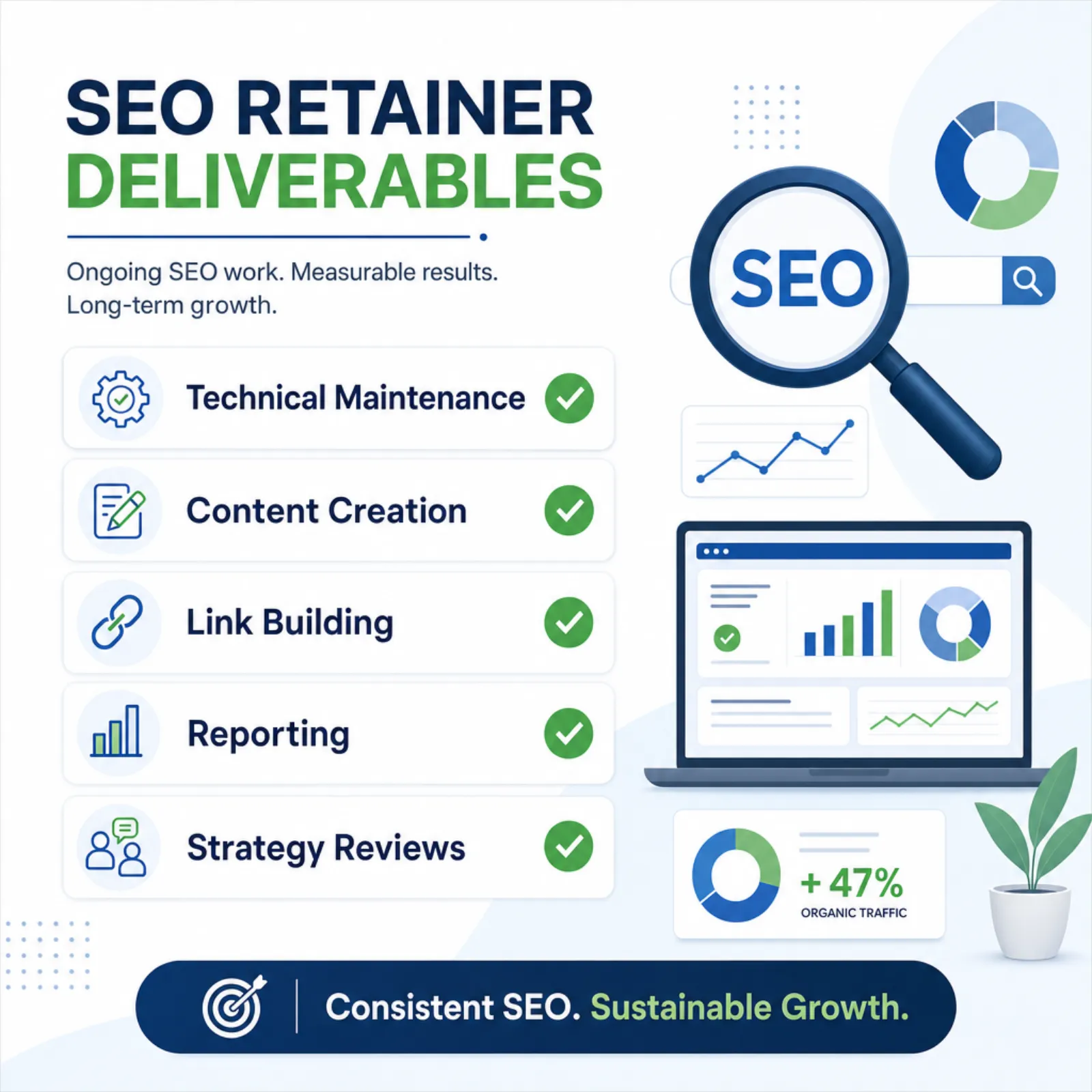
SEO retainer packages vary by agency, but a comprehensive SEO retainer typically includes a combination of the following services delivered on a monthly basis:
- Technical SEO monitoring and fixes: Crawl error resolution, Core Web Vitals optimization, schema markup, site speed improvements
- On-page SEO: Title tags, meta descriptions, header optimization, internal linking adjustments
- Content strategy and production: Keyword research, content briefs, blog posts or landing page copy
- Link building: Outreach campaigns, digital PR, guest posting, broken link building
- Reporting and analysis: Monthly performance reports, keyword tracking, traffic analysis, conversion tracking
- Strategy calls: Regular check-ins (usually monthly or bi-weekly) to review progress and adjust priorities
- Competitor monitoring: Tracking competitor movements and adjusting strategy accordingly
- Algorithm update response: Analyzing how Google updates affect your site and making necessary adjustments
Not every retainer includes all of these. Lower-tier retainers might focus on monitoring and reporting with limited active optimization. Higher-tier retainers include full-service execution across all channels. Use a tool like our E-E-A-T analyzer to identify where your site stands before scoping a retainer.
When to Choose an SEO Retainer
An SEO retainer is the right choice when:
- Organic search is a core growth channel. If a significant portion of your revenue comes from (or should come from) organic traffic, you need sustained investment.
- You're in a competitive market. Industries where multiple competitors are actively investing in SEO require ongoing effort just to maintain position, let alone grow.
- You lack in-house SEO expertise. If you don't have an SEO specialist on staff, a retainer gives you access to a full team without hiring.
- You need consistent content production. Publishing regular, optimized content requires a pipeline that's hard to maintain with one-off projects.
- You want data-driven iteration. The best SEO strategies evolve based on performance data. A retainer gives you the time and structure to test, learn, and optimize.
- You're building long-term brand authority. E-E-A-T (Experience, Expertise, Authoritativeness, Trustworthiness) isn't built in a single project. It requires consistent effort over time.
When to Choose Project-Based SEO
Project-based SEO makes sense when:
- You have a specific, well-defined need. A site migration, a technical audit, or a one-time keyword research project has a clear beginning and end.
- You have in-house resources to implement. If your team can execute SEO recommendations but needs expert guidance on what to do, a project engagement works well.
- Your budget is limited. If you can't commit to monthly spend, a project lets you get professional insight at a manageable cost.
- You're evaluating agencies. A small project is a good way to test an agency's expertise and working style before committing to a retainer.
- You need a second opinion. Sometimes you just need an experienced SEO professional to review your strategy or audit your site.
Many businesses start with a project and transition to a retainer once they see the value of professional SEO. This can be a smart way to build the relationship and establish trust before making a longer commitment.
How to Structure an SEO Retainer Agreement
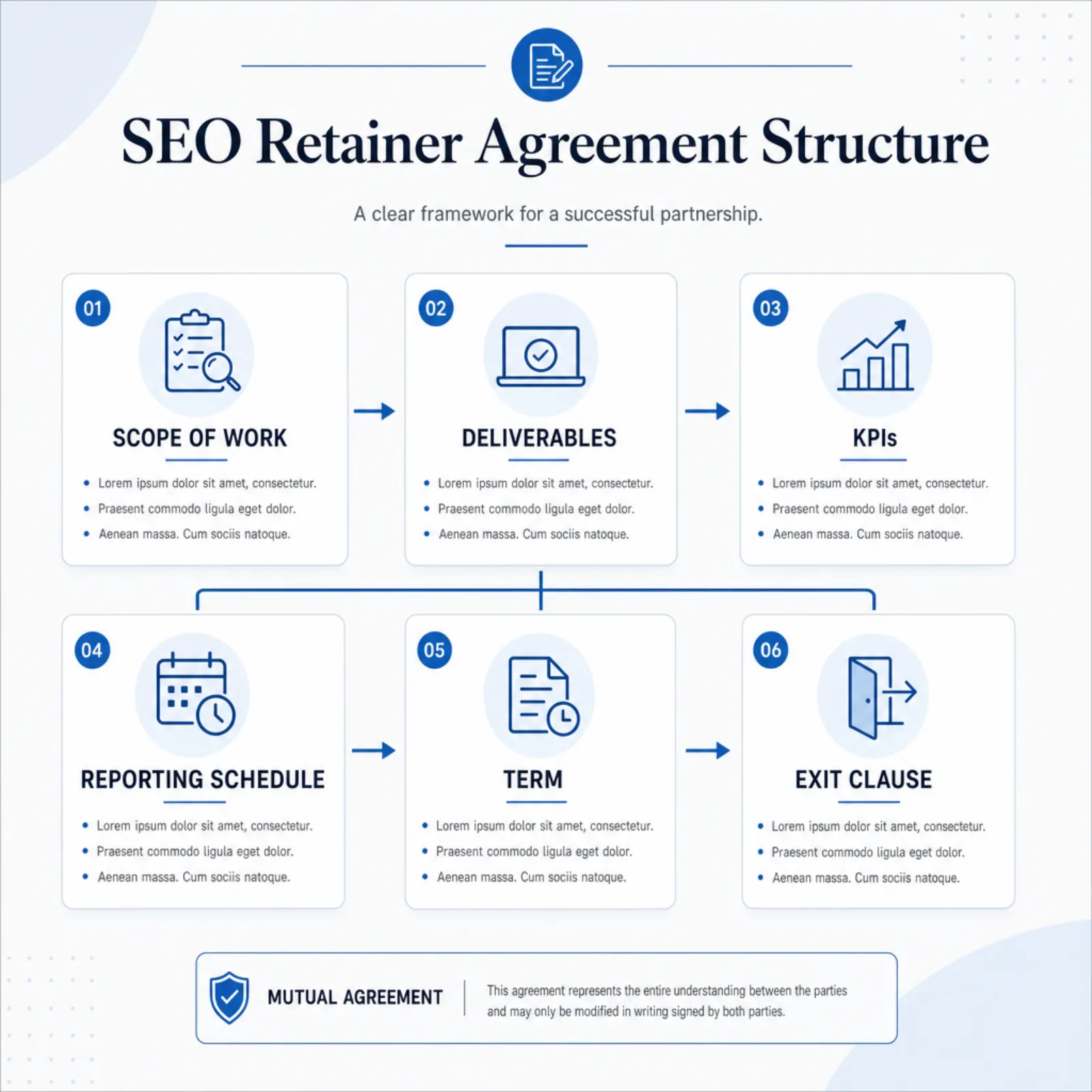
Whether you're an agency or a business, a well-structured retainer agreement protects both parties and sets clear expectations.
Essential Components
- Scope of services: Define what's included (and what's not). Be specific about deliverables like the number of content pieces, links built, or hours allocated.
- Monthly fee and payment terms: Fixed monthly cost, payment schedule, and any conditions for price adjustments.
- Contract length: Most SEO retainers run 6 or 12 months. Shorter contracts give you flexibility. Longer contracts often come with lower monthly rates.
- Termination clause: How much notice is required to end the agreement? 30 days is standard.
- KPIs and reporting: What metrics will be tracked? How often will reports be delivered? What does success look like at 3, 6, and 12 months?
- Communication cadence: Frequency of strategy calls, response time expectations, and primary points of contact.
- Content ownership: Clarify who owns content, strategies, and any custom tools or templates created during the engagement.
- Access requirements: What tools and platforms does the agency need access to (Google Analytics, Search Console, CMS, etc.)?
Setting Realistic Expectations
SEO takes time. A responsible agency will set expectations for when you should start seeing results. Typically, initial improvements in technical health and indexation happen within the first 1-3 months. Meaningful ranking improvements start appearing around months 3-6. Significant traffic and revenue growth often takes 6-12 months of consistent effort.
Be cautious of any agency that guarantees specific rankings or promises dramatic results in weeks. That's not how SEO works.
Questions to Ask Before Signing an SEO Retainer
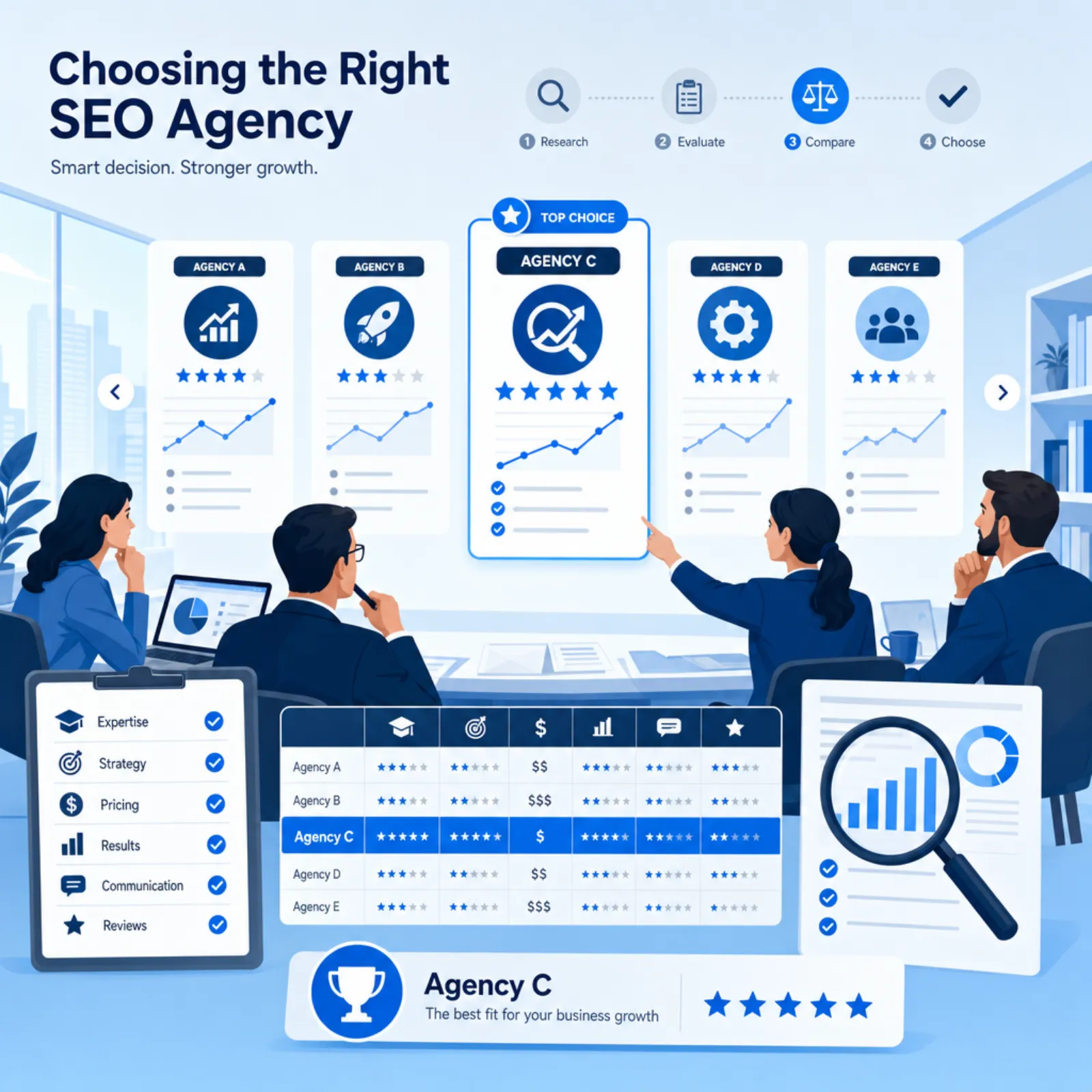
Before committing to a monthly SEO retainer, ask potential agencies these questions:
- What does a typical month look like? You want a clear picture of activities and time allocation.
- How do you prioritize tasks? The agency should have a methodology for deciding what to work on and when.
- What are the expected results at 3, 6, and 12 months? Look for realistic projections, not vague promises.
- How do you report on progress? Monthly reports should include traffic data, ranking changes, work completed, and next steps.
- Who will be working on my account? Know the team, their experience level, and whether your primary contact is the strategist or a project manager.
- How do you handle algorithm updates? A good agency proactively monitors and responds to Google updates.
- What happens if results aren't meeting expectations? Understand how the agency adjusts strategy when things aren't working.
- Can I see case studies or references? Past performance is the best predictor of future results.
- What do you need from us? SEO requires collaboration. Understand what internal resources and access the agency will need.
- What's the process for ending the contract? Know the exit terms upfront so there are no surprises.
The answers to these questions will tell you a lot about how the agency operates and whether they're the right fit for your business.
Making the Right Choice
Choosing between an SEO retainer and project-based SEO comes down to your growth ambitions and the role organic search plays in your business. If SEO is a nice-to-have, a project might be sufficient. If it's a critical revenue driver, a retainer is almost always the better investment.
At Atastic, we offer both models. Many of our clients start with an SEO audit or strategy project to establish a baseline, then transition to a retainer for ongoing execution and optimization. This approach lets you validate the partnership before making a long-term commitment.
Ready to explore which model fits your business? Get in touch for a free consultation, or check out our pricing page to see what different engagement levels include.