Local SEO: The Complete Guide to Ranking in Your Area
Learn how to improve your local SEO to attract more customers in your area. This guide covers Google Business Profile optimization, local citations, reviews, and on-page tactics.
Atastic Team
Digital Marketing Agency
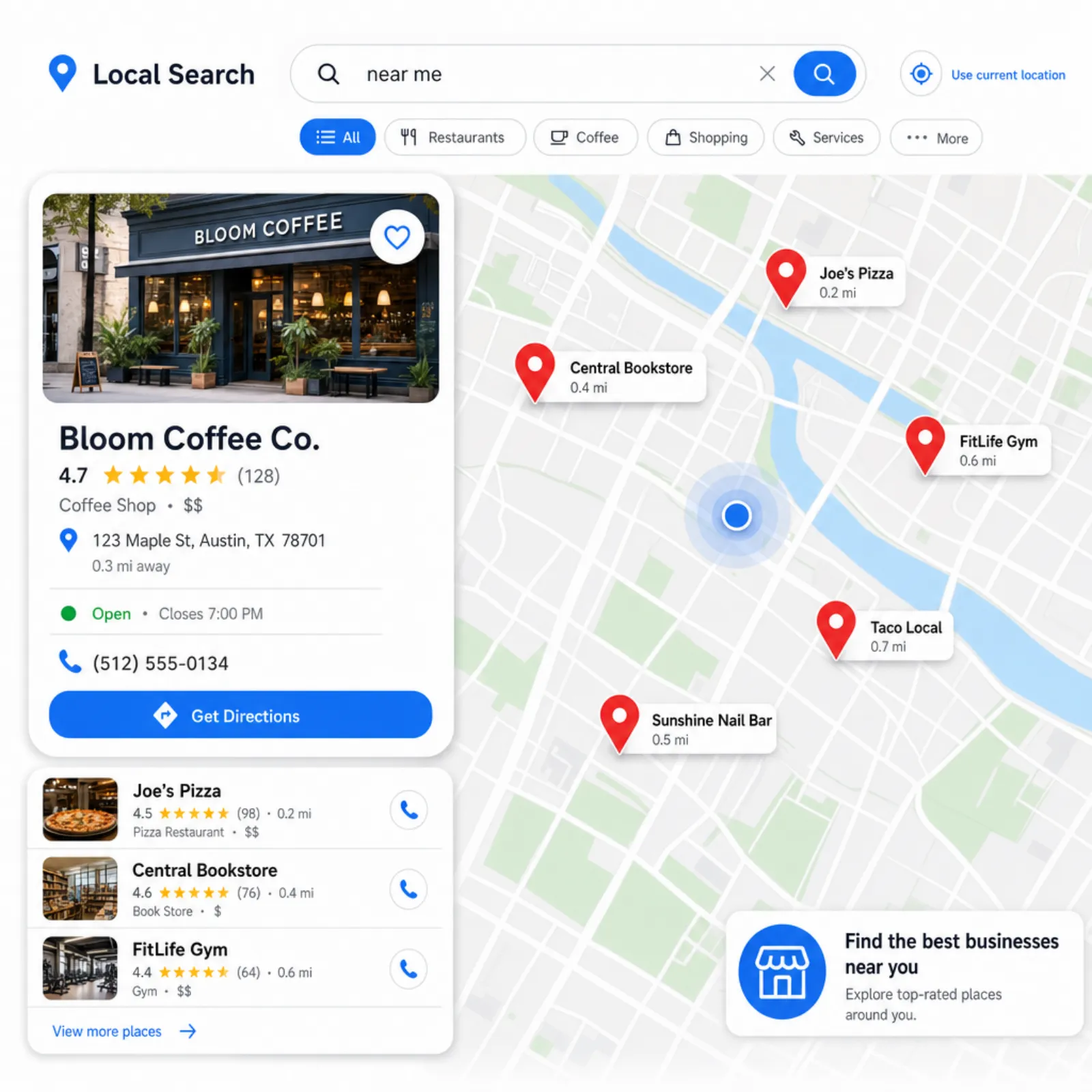
Local SEO is the practice of optimizing your online presence to attract more business from local searches. When someone searches "coffee shop near me" or "plumber in Austin," Google serves local results, and local SEO determines whether your business shows up.
For businesses that serve a specific geographic area, local SEO is one of the highest-ROI marketing activities you can invest in. Nearly half of all Google searches have local intent, and 76% of people who search for a local business visit one within a day.
How Local Search Works
Google uses three primary factors to determine local rankings:
- Relevance: How well your business profile matches what the searcher is looking for
- Distance: How close your business is to the searcher's location
- Prominence: How well-known and established your business is (reviews, links, citations, overall SEO authority)
You can't control distance, but you can heavily influence relevance and prominence. That's what local SEO focuses on.
Local Pack vs. Organic Results
For local searches, Google shows two types of results:
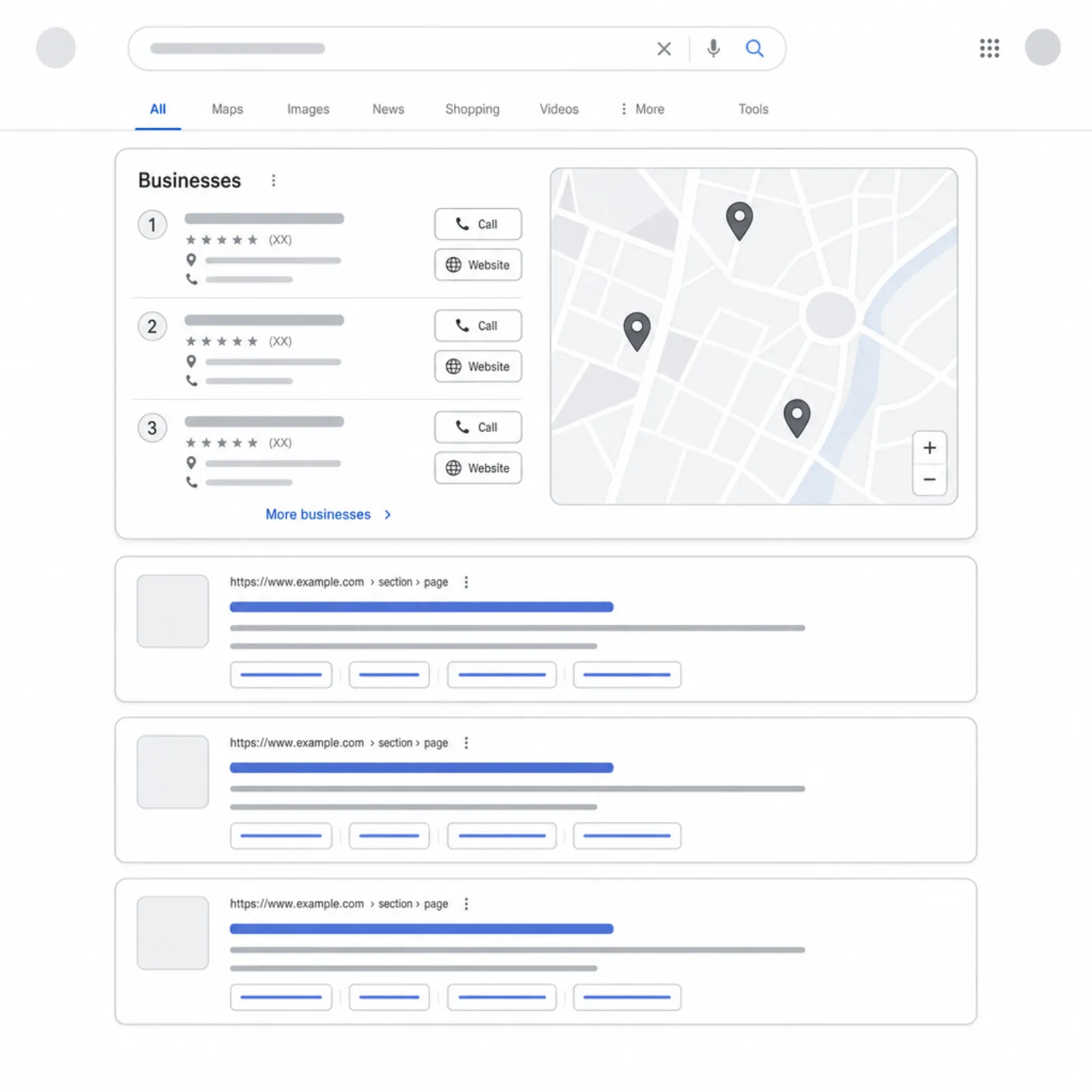
- Local Pack (Map Pack): The map with 3 business listings that appears at the top of local search results. This is driven primarily by your Google Business Profile.
- Local organic results: Standard blue-link results below the map, driven by traditional SEO signals applied to your website.
A complete local SEO strategy targets both. They require different optimization approaches.
Google Business Profile Optimization
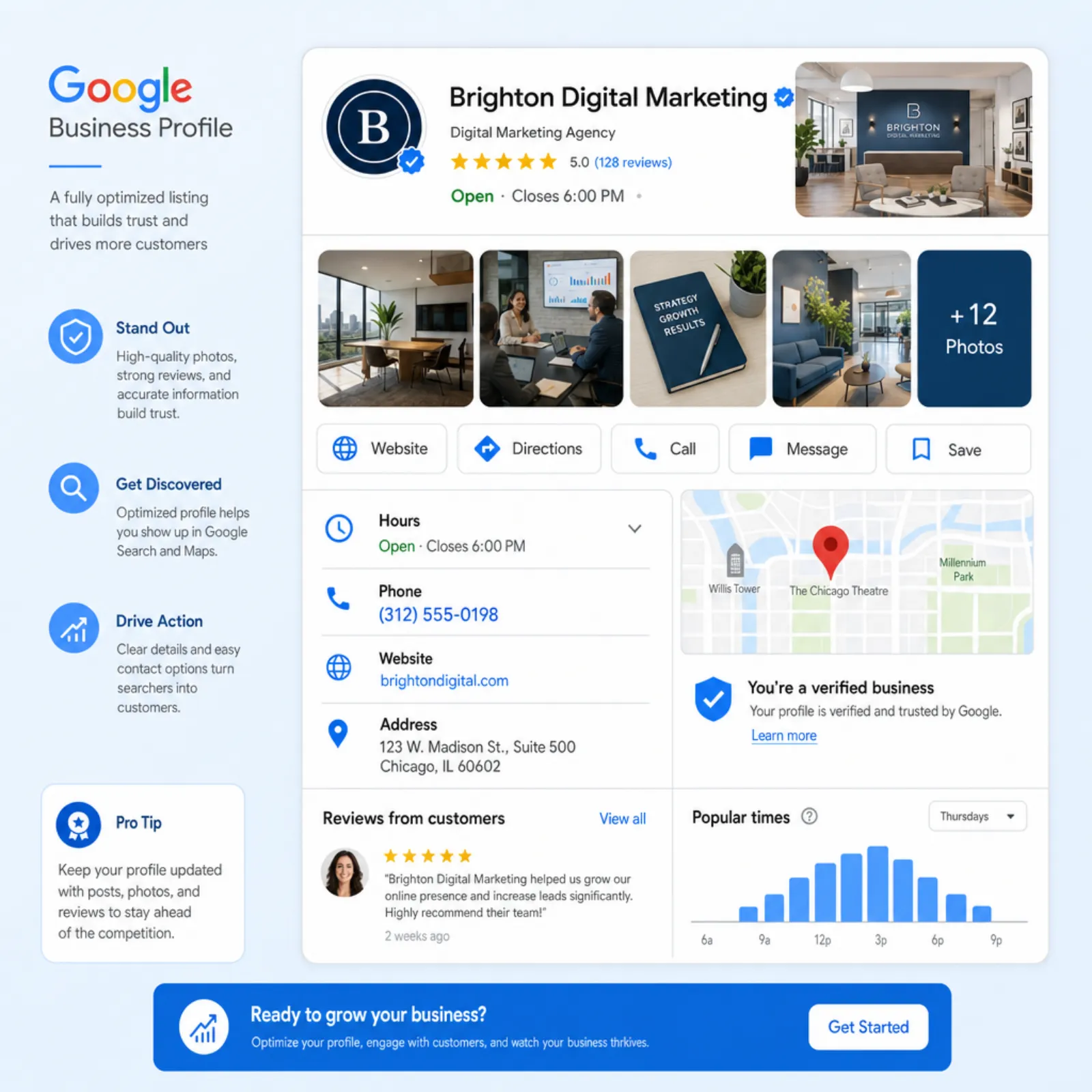
Your Google Business Profile (GBP) is the single most important factor for ranking in the Local Pack. If you do nothing else for local SEO, optimize your GBP.
Claim and Verify Your Profile
If you haven't already, claim your business at business.google.com. Complete the verification process (usually a postcard, phone call, or email verification). If a profile already exists that you didn't create, claim ownership of it.
Complete Every Section
Google favors complete profiles. Fill out everything:
- Business name: Use your real business name exactly as it appears in the real world. Don't stuff keywords.
- Category: Choose the most specific primary category. Add relevant secondary categories (up to 10).
- Address: Ensure it matches your website and citations exactly.
- Phone number: Use a local number, not a toll-free number.
- Website URL: Link to a relevant landing page, ideally a location-specific page.
- Hours: Keep them accurate, including holidays and special hours.
- Business description: Write a clear description of your business. Include your services and service area naturally.
- Attributes: Select all relevant attributes (wheelchair accessible, free Wi-Fi, etc.).
Add Photos and Videos
Businesses with photos receive 42% more requests for directions and 35% more click-throughs. Upload:
- Exterior photos (help customers find you)
- Interior photos (show the atmosphere)
- Team photos (humanize your business)
- Product/service photos
- A cover photo and logo
Add new photos regularly. Fresh visual content signals an active, thriving business.
Use Google Posts
Google Posts let you publish updates, offers, events, and announcements directly on your profile. Post at least weekly. Include a call to action and relevant keywords. Posts expire after 7 days, so consistency matters.
Local Citations: NAP Consistency
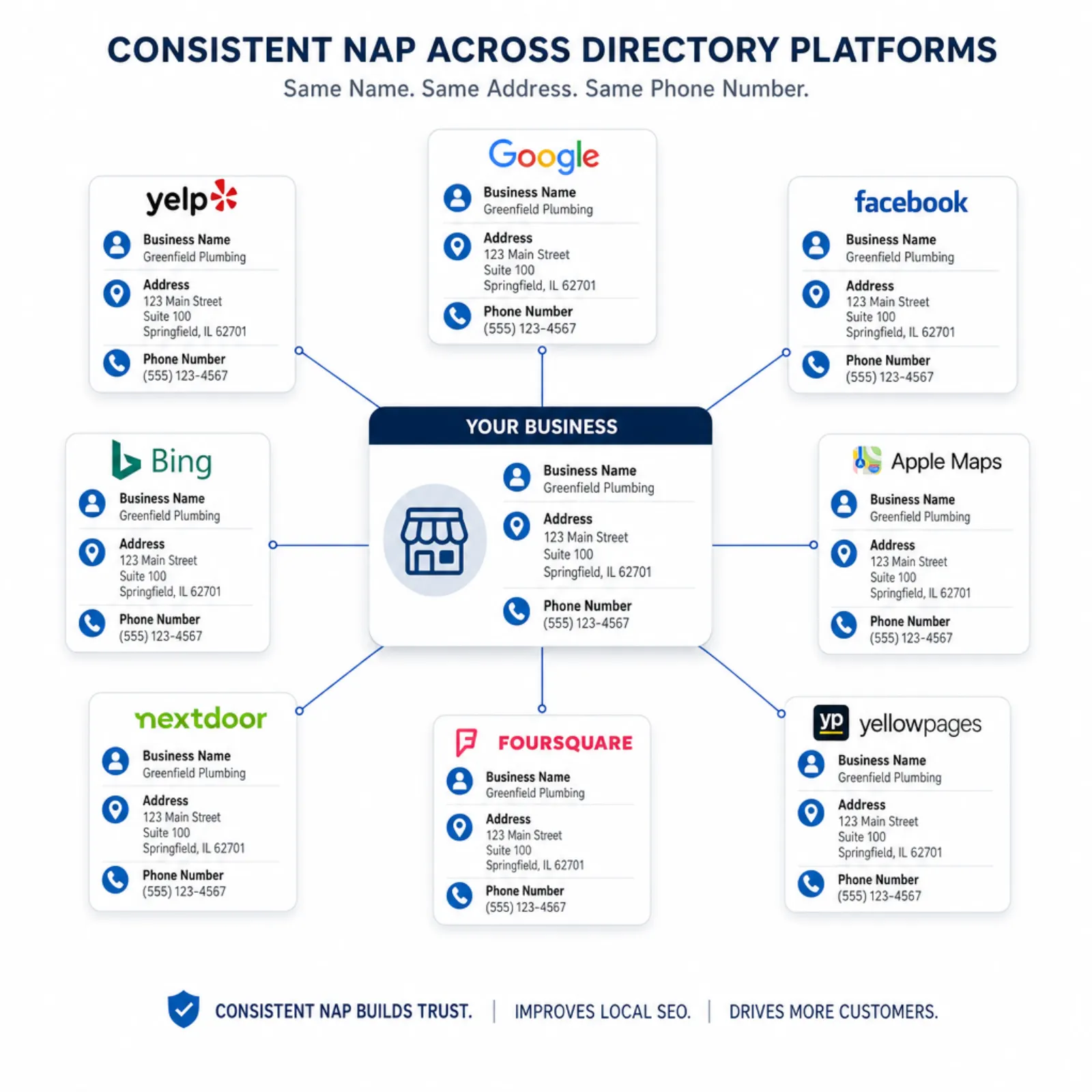
A local citation is any online mention of your business's Name, Address, and Phone number (NAP). Citations appear in business directories, social platforms, and industry-specific sites.
Why Consistency Matters
Google cross-references your business information across the web. Inconsistent NAP data (different addresses, phone numbers, or business name variations) confuses Google and reduces your local ranking potential.
Audit your citations on these critical platforms:
- Google Business Profile
- Apple Maps
- Bing Places
- Yelp
- Better Business Bureau
- Industry-specific directories (Avvo for lawyers, Healthgrades for doctors, etc.)
Building Citations
Submit your business to relevant directories with consistent NAP information. Focus on:
- Major data aggregators: Foursquare, Data Axle, Localeze
- Industry directories: Specific to your business type
- Local directories: Chamber of Commerce, local business associations
- Social profiles: Facebook, LinkedIn, Instagram
Reviews: Your Most Powerful Local SEO Signal
Reviews influence both rankings and click-through rates. Google has confirmed that reviews are a factor in local ranking, and consumers overwhelmingly trust businesses with more (and better) reviews.
How to Get More Reviews
- Ask at the point of maximum satisfaction: Right after a successful service delivery or purchase
- Make it easy: Send a direct link to your Google review page via email or text
- Train your team: Every customer-facing employee should know how and when to ask
- Follow up: Send a review request email 1-3 days after service completion
Responding to Reviews
Respond to every review, positive and negative:
- Positive reviews: Thank the customer specifically. Mention the service they received. Keep it genuine.
- Negative reviews: Respond professionally and promptly. Acknowledge the issue, apologize where appropriate, and offer to resolve it offline. Never argue publicly.
Response rate and quality signal to both Google and potential customers that you care about customer experience.
On-Page SEO for Local Businesses
Your website needs local optimization to rank in organic results and support your GBP listing.
Location Pages
If you serve multiple locations, create a dedicated page for each one. Each location page should include:
- Location-specific title tag and meta description
- NAP information (matching your GBP and citations)
- Embedded Google Map
- Unique content about that location, including services offered, team members, and customer testimonials
- Location-specific photos
Don't create thin, duplicate pages with just the city name swapped out. Each location page needs genuinely unique content.
Schema Markup
Add LocalBusiness schema markup to your location pages. This structured data helps Google understand your business details and can enhance your appearance in search results. Include:
- Business name, address, phone number
- Business type
- Opening hours
- Price range
- Geographic coordinates
Local Keyword Optimization
Target keywords that include location modifiers:
- "[service] in [city]", e.g. "plumber in Austin"
- "[service] near [landmark]", e.g. "dentist near downtown Portland"
- "best [service] [city]", e.g. "best pizza Chicago"
Include these naturally in your title tags, headers, content, and meta descriptions. Don't over-optimize. Write for humans first.
Local Link Building
Backlinks from local and relevant websites boost both your local and organic rankings.
Local Link Building Tactics
- Local partnerships: Partner with complementary businesses for cross-promotion and links
- Community involvement: Sponsor local events, charities, or sports teams (these often come with a link from the organization's website)
- Local PR: Build relationships with local journalists and publications. Newsworthy events, data, or community initiatives earn press coverage and links.
- Guest posting: Contribute expert content to local business publications and blogs
- Chamber of Commerce: Membership typically includes a directory listing with a backlink
Common Local SEO Mistakes
- Inconsistent NAP: The most common and most damaging local SEO error. Audit and fix all variations.
- Ignoring reviews: Not asking for reviews or not responding to them signals indifference.
- Keyword-stuffed business name: Adding keywords to your GBP business name violates Google's guidelines and risks suspension.
- Duplicate GBP listings: Multiple listings for the same business confuse Google. Merge or remove duplicates.
- Neglecting the website: GBP optimization alone isn't enough. Your website needs strong technical and on-page SEO too.
- Fake reviews: Google is increasingly effective at detecting fake reviews. It's not worth the risk.
Measuring Local SEO Success
Track these metrics to gauge your local SEO performance:
- GBP Insights: Search queries, profile views, direction requests, phone calls, website clicks
- Local keyword rankings: Track rankings for your target "[service] + [city]" keywords
- Organic traffic from local searches: Filter Google Analytics by geographic location
- Review velocity and rating: Number of new reviews per month and average rating
- Citation accuracy: Regular audits to ensure NAP consistency
Get Expert Local SEO Help
Local SEO involves multiple moving parts, from GBP optimization to citation management to review strategy. At Atastic, our SEO services include comprehensive local SEO for businesses that need to dominate their local market.
Contact us to discuss how we can improve your local search visibility.