How to Create a Social Media Marketing Strategy That Works
Build a social media marketing strategy that drives real business results. Learn how to choose platforms, create content, grow your audience, and measure ROI across social channels.
Atastic Team
Digital Marketing Agency
A social media marketing strategy is a documented plan that outlines how your business will use social platforms to achieve specific marketing objectives. Without one, social media becomes a time-consuming activity that feels productive but doesn't move the needle.
This guide walks through building a social media strategy from scratch, from choosing the right platforms to creating content that engages, growing your audience, and proving ROI to stakeholders.
Why Your Business Needs a Social Media Strategy
Over 5 billion people use social media worldwide. Your customers are there. Your competitors are there. But presence alone isn't a strategy, and most businesses waste time and money on social media because they lack a clear plan.
A defined social media marketing strategy helps you:
- Focus your effort: Stop trying to be everywhere and do everything
- Create with purpose: Every post serves a strategic goal
- Measure results: Know whether your social efforts are worth the investment
- Maintain consistency: Build brand recognition through regular, coherent messaging
- Align with business goals: Connect social activity to outcomes that matter
Step 1: Set Clear Objectives
Before choosing platforms or creating content, define what you want social media to do for your business. Common objectives include:
- Brand awareness: Reach new audiences and increase visibility
- Community building: Create engaged followers who advocate for your brand
- Lead generation: Drive prospects to your website or lead capture forms
- Customer support: Provide fast, public customer service
- Website traffic: Send qualified visitors to your content and landing pages
- Sales: Drive direct purchases through social commerce
Pick 1-2 primary objectives. Trying to achieve everything at once leads to unfocused content and diluted results. Your objectives should align with your broader digital marketing strategy.
Step 2: Know Your Audience
Effective social media marketing starts with understanding who you're talking to. You need to know:
- Demographics: Age, location, job title, income level
- Which platforms they use: And how they use them (lurking vs. engaging vs. creating)
- What content they engage with: Educational? Entertaining? Inspirational? News?
- When they're active: Time of day and day of week patterns
- What problems they have: That your content can address
Research Methods
- Analyze your existing followers' demographics (each platform provides this data)
- Review competitor accounts to see who follows them and what content gets engagement?
- Survey your customers about their social media habits
- Use social listening tools to understand conversations in your industry
Step 3: Choose Your Platforms
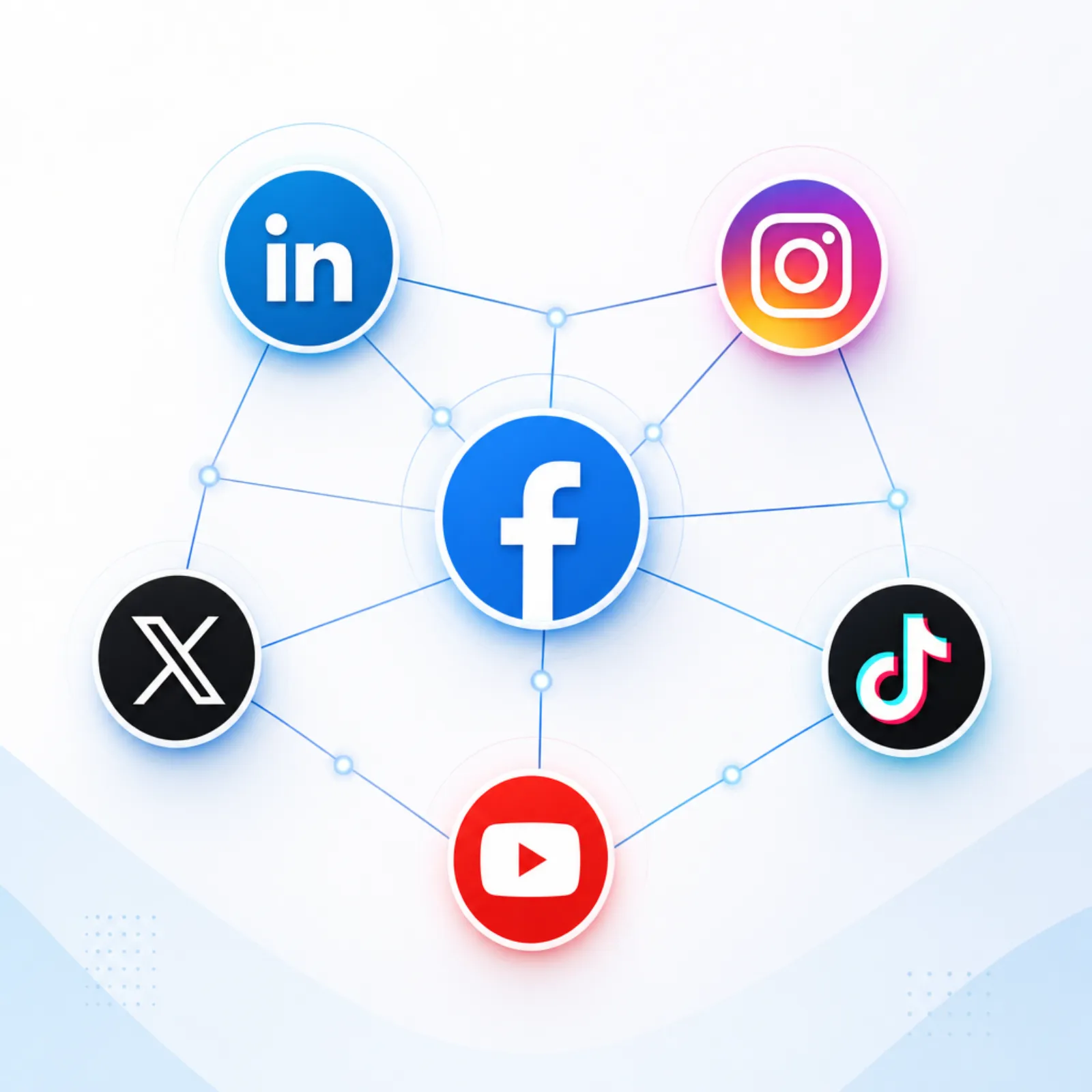
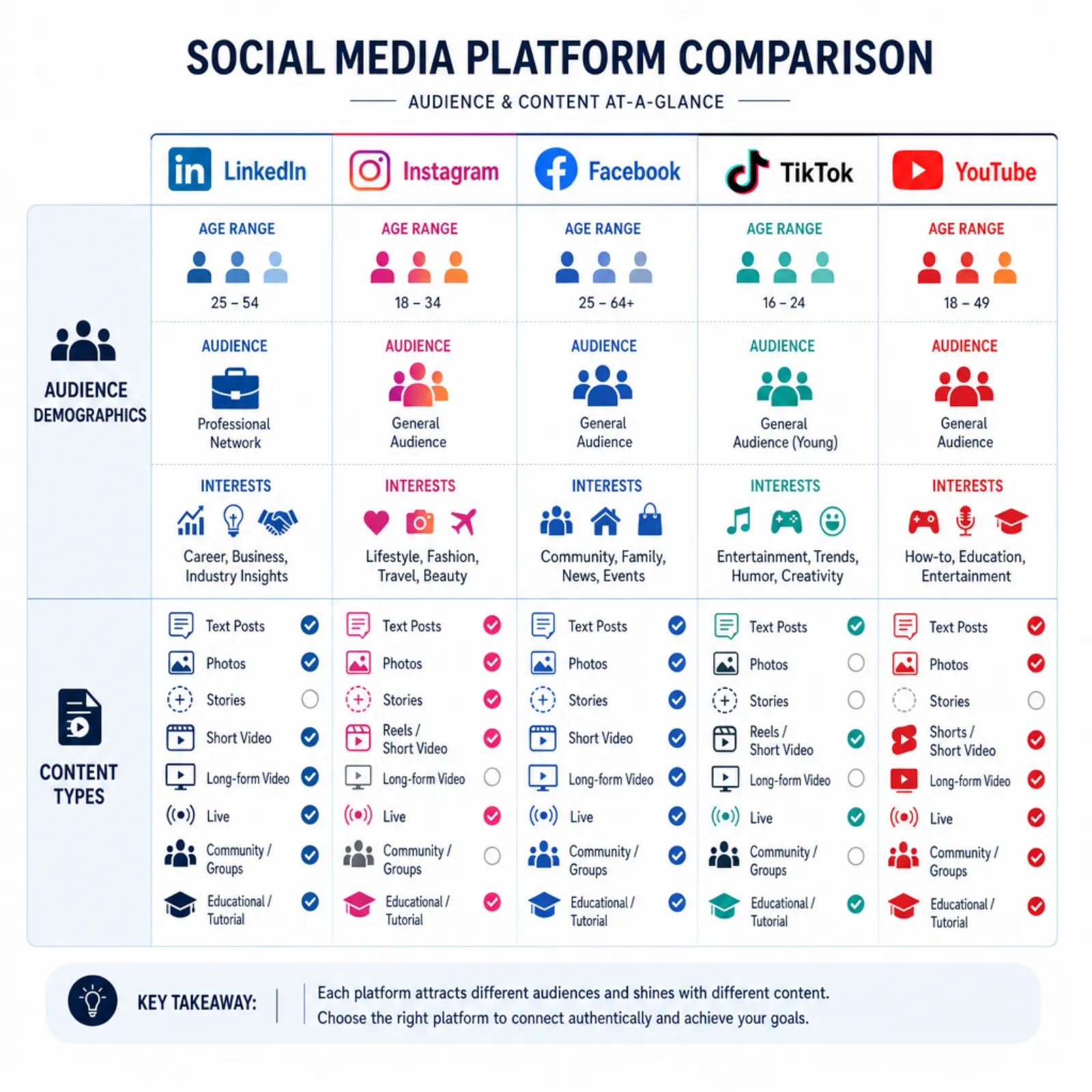
You don't need to be on every platform. Choose 2-3 where your audience is most active and where you can consistently produce quality content.
Platform Guide
LinkedIn: Best for B2B, professional services, recruitment, and thought leadership. Users are in a business mindset. Long-form content, industry insights, and professional expertise perform well.
Instagram: Best for visual brands, e-commerce, lifestyle, food, travel, and fashion. Strong for brand building and community. Reels currently get the best organic reach.
Facebook: Largest user base but declining organic reach. Best for local businesses, community groups, and paid social advertising. The ad platform remains the most sophisticated for targeting.
X (Twitter): Best for real-time engagement, news, tech, media, and customer service. Good for building personal brands and participating in industry conversations.
TikTok: Best for reaching younger audiences and brands that can embrace short-form video. Organic reach is still strong. Content authenticity outperforms polished production.
YouTube: Best for long-form educational content, tutorials, and brand storytelling. Videos have long shelf life and can rank in both YouTube and Google search.
Pinterest: Best for DIY, home decor, recipes, fashion, and planning-related content. Functions more as a visual search engine than a social network.
How to Choose
Match platforms to your audience and content capabilities:
- Where does your target audience spend the most time?
- What content format can you realistically produce consistently? (Video? Writing? Images?)
- Where are your competitors most active and successful?
- What platform aligns with your marketing objectives?
Step 4: Build Your Content Strategy
Content is the core of social media marketing. Your content strategy defines what you'll post, why, and how often.
The Content Mix
A balanced social media content strategy typically follows a ratio like:
- 50% value content: Educational posts, tips, how-tos, industry insights
- 25% curated/community content: Sharing others' content, user-generated content, industry news
- 20% brand content: Behind-the-scenes, company culture, team spotlights, case studies
- 5% promotional content: Direct product/service promotion, offers, CTAs
The exact ratio varies by platform and audience, but the principle holds: give more value than you ask for.
Content Pillars
Content pillars are 3-5 core themes that all your content falls under. They keep your content focused and make planning easier. For example, a social media marketing agency might use:
- Social media tips and best practices
- Client results and case studies
- Industry news and trends
- Team and company culture
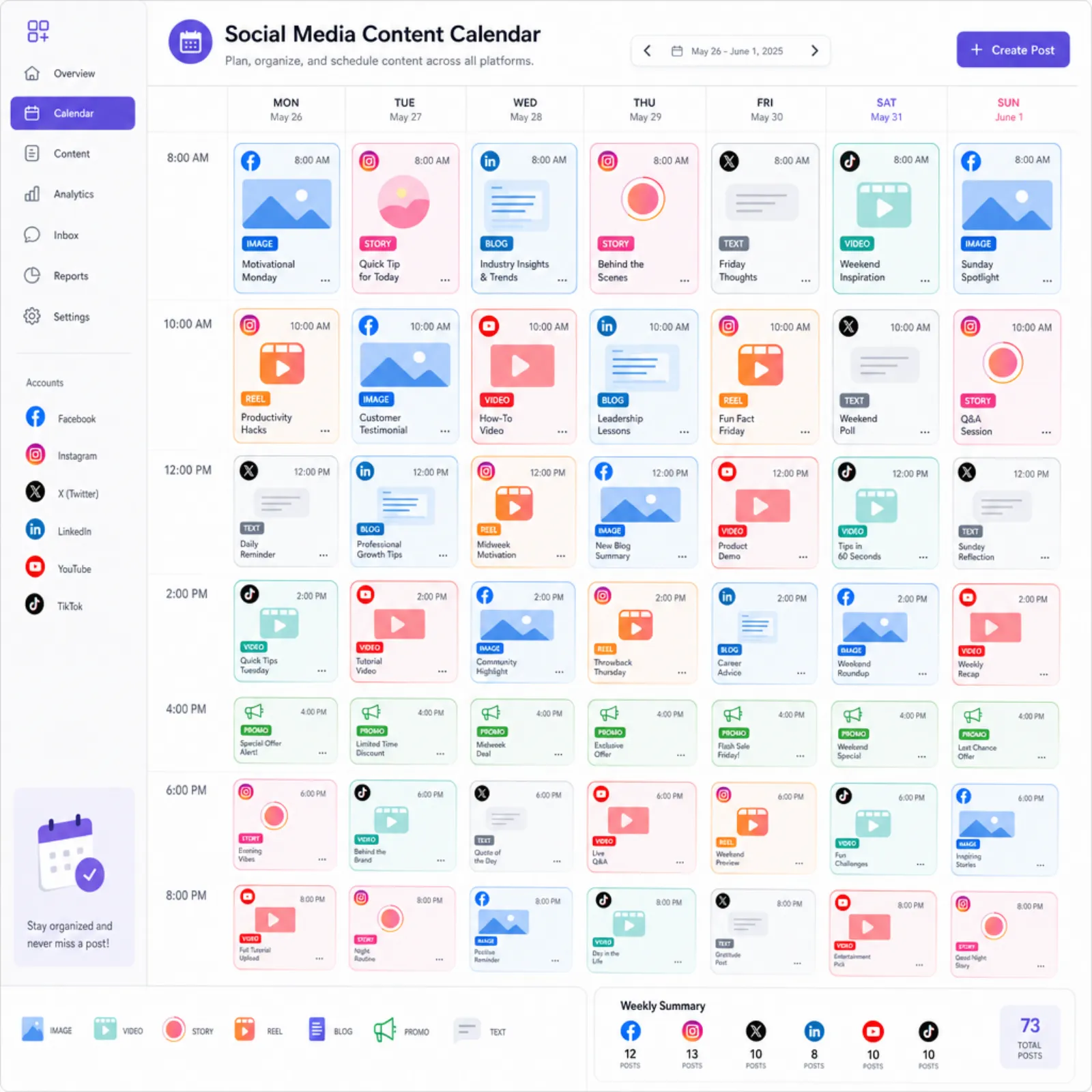
Content Calendar
Plan content at least 2 weeks ahead. A content calendar should include:
- Post date and time
- Platform
- Content pillar / category
- Copy and creative assets
- Hashtags and tags
- Links and UTM parameters
Use a scheduling tool (Buffer, Hootsuite, Later, or native platform schedulers) to batch-schedule content. This frees you to focus on real-time engagement.
Step 5: Create Engaging Content
What separates good social content from noise? These principles apply across all platforms:
Hook First
The first line (or first 3 seconds of video) determines whether people keep reading or scrolling past. Lead with a bold claim, surprising statistic, or relatable problem.
Provide Value
Every post should leave the reader better off than before. Teach something. Solve a problem. Entertain. Inspire. If your content doesn't do one of these, it's not worth posting.
Encourage Engagement
Posts that generate comments get more reach (algorithms reward engagement). Ask questions, invite opinions, and respond to every comment.
Platform-Native Formats
Don't cross-post identical content everywhere. Adapt for each platform:
- LinkedIn: Text posts with insights, carousels, articles
- Instagram: Reels, carousels, Stories, high-quality images
- TikTok: Short-form vertical video, trends, authentic content
- X: Concise text, threads for longer content, polls
Step 6: Grow Your Audience
Organic audience growth on social media requires consistency and strategic effort.
Organic Growth Tactics
- Post consistently: Accounts that post regularly grow faster than those that post sporadically
- Engage with others: Comment on posts in your niche. Build relationships. Social media is social.
- Use hashtags strategically: Research relevant hashtags. Mix popular and niche tags.
- Collaborate: Partner with complementary brands or creators for cross-promotion
- Repurpose content: Turn blog posts into social content, podcasts into clips, webinars into shorts. Get more mileage from your content marketing efforts.
Paid Social Advertising
Organic reach has declined on most platforms. Paid social accelerates growth and drives direct results.
- Boost high-performing organic posts: If a post is getting good organic engagement, putting budget behind it amplifies results
- Run targeted awareness campaigns: Use platform targeting to reach people who match your ideal customer profile
- Retarget website visitors: Show social ads to people who've visited your site but haven't converted
- Use lookalike audiences: Reach new people who resemble your existing customers
Even a small monthly budget ($500-1,000) can significantly accelerate audience growth and lead generation. Learn more about our paid media services.
Step 7: Measure and Optimize
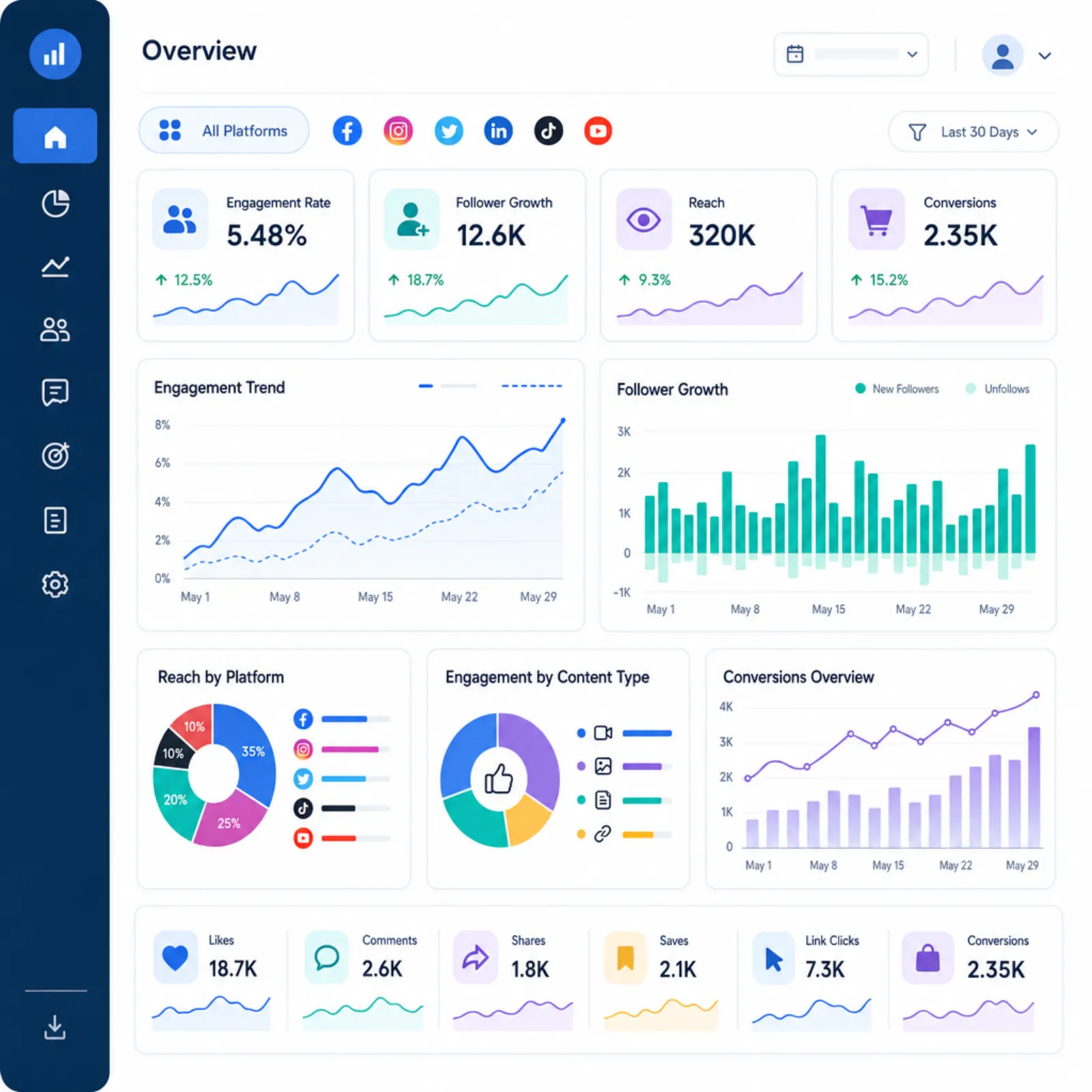
Track performance against your objectives. The metrics that matter depend on your goals.
Awareness Metrics
- Reach and impressions
- Follower growth rate
- Share of voice vs. competitors
Engagement Metrics
- Engagement rate (likes + comments + shares / reach)
- Comments and saves
- Click-through rate
Conversion Metrics
- Website traffic from social
- Leads generated from social
- Conversion rate by platform
- Revenue attributed to social
Reporting Cadence
- Weekly: Review engagement and posting consistency
- Monthly: Full performance report against KPIs
- Quarterly: Strategy review and adjustment based on trends
Use analytics tools to connect social activity to business outcomes. UTM parameters on all shared links make attribution possible.
Social Media Strategy Template
Here's a summary framework you can adapt:
- Objectives: What are your 1-2 primary goals?
- Audience: Who are you targeting? Which personas?
- Platforms: Which 2-3 platforms will you focus on?
- Content pillars: What 3-5 themes will your content cover?
- Posting frequency: How often will you post on each platform?
- Content mix: What percentage educational vs. promotional vs. brand?
- Paid strategy: What budget for paid social? What campaign types?
- KPIs: What metrics define success?
- Review schedule: When will you analyze and adjust?
Need Help With Your Social Media Strategy?
Building and executing a social media marketing strategy takes consistent effort and expertise. At Atastic, our social media marketing services cover strategy development, content creation, community management, paid social campaigns, and performance reporting.
Get in touch to discuss how we can help you build a social media presence that drives real business results.